Today is Tomorrow’s History
How Lloyd Harris’ lifelong quest to preserve Bartow’s past cemented him as an essential bridge to its future
Photos provided by Jordan Randall and provided by Lloyd Harris
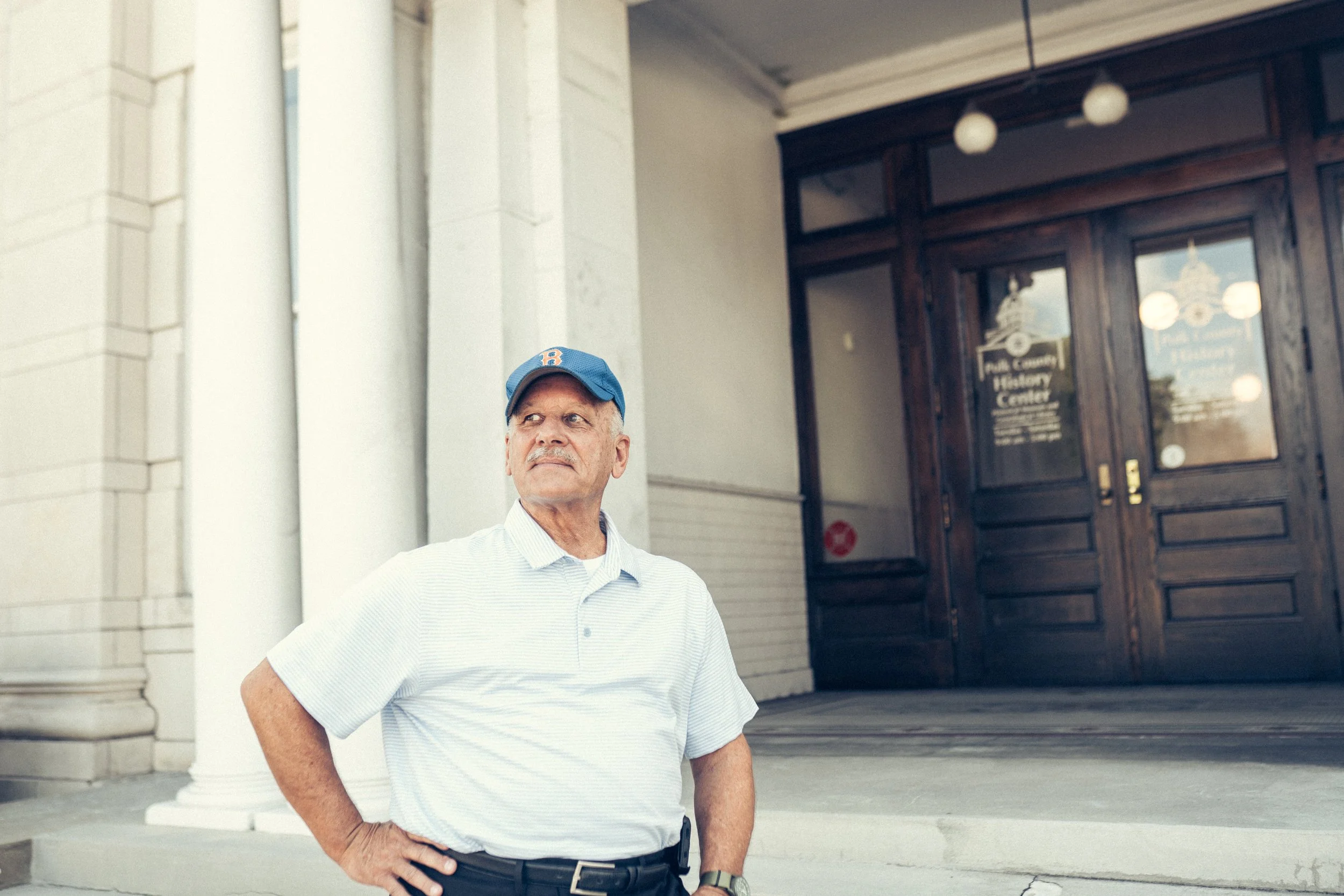
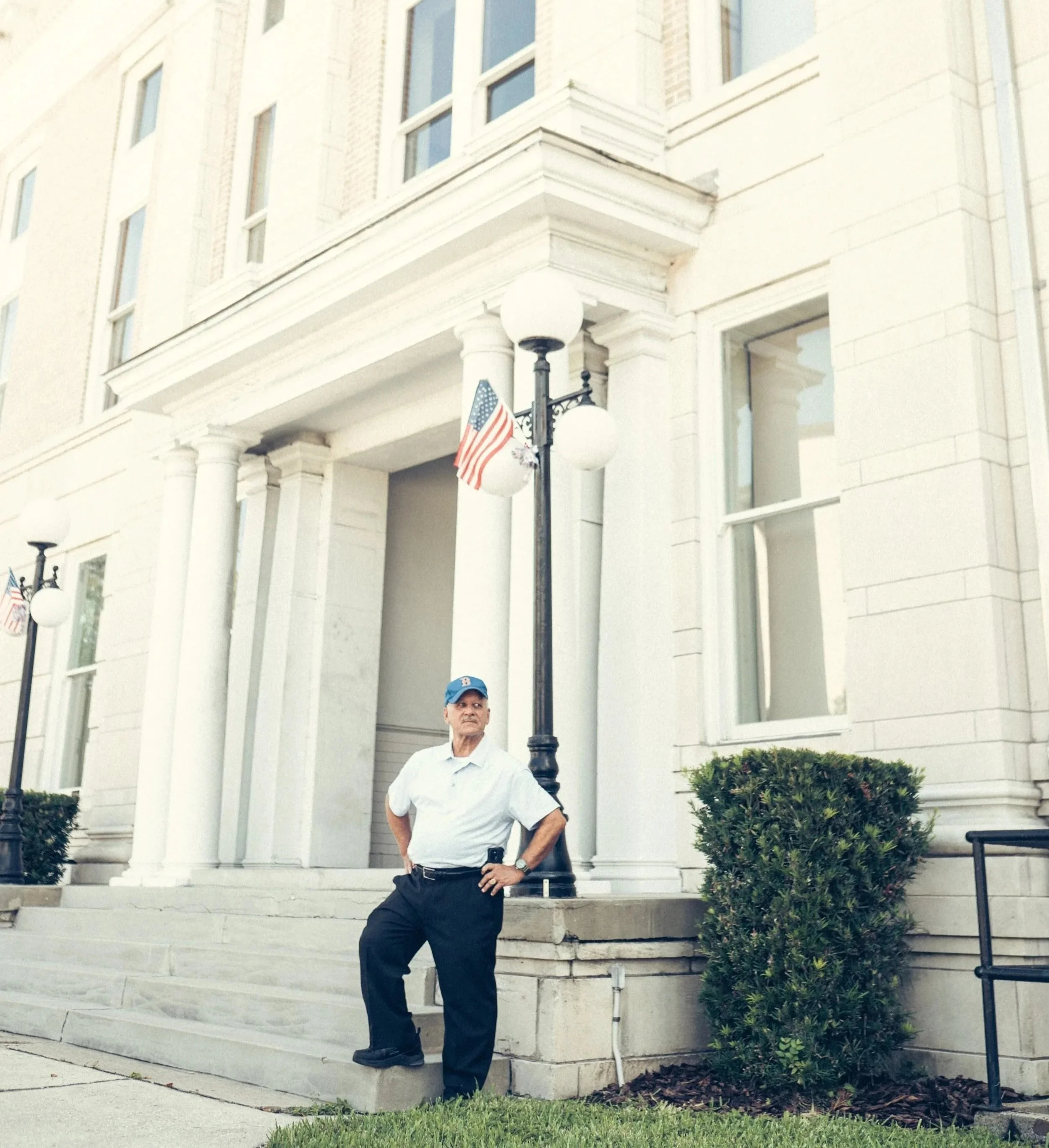
Lloyd Harris, Bartow's Unofficial City Historian
For Lloyd Harris, his interest in history began with a parade. Not just any parade, but one during Bartow’s 1961 Polk County Centennial celebration, a yearlong spectacle that transformed the city into a living history book. There were horses and oxen, antique automobiles and carriages, military uniforms and pioneer costumes, bands and floats, cowboys and scouts, Yankees and Rebels. Business folk dressed for the occasion, men grew beards and a replica courthouse stood on the lawn of the county courthouse, which today is home to the Polk County History Center.
Harris was there to see it all, perched on the hood of his grandfather’s Rambler outside the old Ritz Theatre and Tate Phillips Hardware store. He was too short to see over the crowd, so his grandfather, David Lewis “Pop” McClintock, found a practical solution.
From that elevated perch, a young Harris watched Bartow celebrate a century of Polk County life. Decades later, he still recalls the parade with the wonder of someone who had stumbled into a world larger than himself.
“It was better than a Disney experience,” Harris remembers, “and everyone was full of tales!” The parade may have been the spark, but the kindling had been gathering for years.
A Childhood Built Around Stories
Harris had already developed a fascination with the past through the books, television and family stories of his childhood. In 1959, at the age of five he convinced his grandmother, Estell Harris, to help him get his first library card at the Public Library on Stanford Street. His older cousin, Robert Manis, already had one, and Harris wanted his own armful of books.

Librarian Bernice Holm issued the card. His first selections were “Monitor & Merrimac,” about the famous Civil War naval battle, and “Mad Anthony Wayne,” about the Revolutionary War hero.
He was still developing as a reader, but the illustrations were enough to capture his imagination. Many years later, Harris would take ownership of those two books when he stumbled across them at a book sale at the library. His own family’s history was just as compelling to him. His maternal grandfather, David Lewis McClintock, was a contractor, educator, musician and minister with a deep interest in ancient history. He maintained an extensive library centered on Biblical, theological and historical subjects, eventually passing the collection to Harris. He was also a heraldic artist who created hundreds of family coats of arms and built an elaborate miniature circus beginning in the 1930s.
McClintock’s own stories stretched from western Pennsylvania to the American frontier. He grew up in Pittsburgh, saw Buffalo Bill’s Wild West show in 1910 and witnessed the final days of the great riverboats. His father worked on the railroad, and family lore was filled with locomotives, pioneer life and the early history of Allegheny County.
There were unusual connections, too. A cousin, Walter McClintock, spent years living among the Blackfoot people in Montana and became a Yale-educated ethnologist and published author. The elder McClintock collected fossils, shark teeth and seashells, while his interest in Plains Indian culture became part of the stories he shared with his grandson.
On his father’s side, Lloyd's grandfather, Calvin Frank Harris, brought another kind of history. Born in Berrien County, Georgia, the World War I veteran and superintendent of Bartow’s Crystal Ice Works, carried stories of Southern pioneer life and the Harris family’s Georgia roots, which stretched between Savannah and Valdosta back to the American Revolution.
Harris was also raised alongside an older generation that could still remember people and events that seemed impossibly distant. His great-grandmother, Julia Westberry Harris, lived in the family household during Lloyd's first 13 years. From her and his grandparents came stories reaching back through generations, including family connections to people who had lived through the Civil War.
History, in other words, was never abstract. It had names, faces and often, it lived right down the street.
Learning to Look
Harris’s parents encouraged his curiosity. His mother, Dorothy “Dot” Harris, was an accomplished maker of costumes, creating whatever was needed for school, church, community events or Halloween. Rather than dressing up as monsters and ghosts, Harris gravitated toward historical characters, particularly military figures.
Family trips became unofficial history tours. His parents took him to historic sites, state and national parks and roadside markers, stopping along the way whenever something caught his attention.
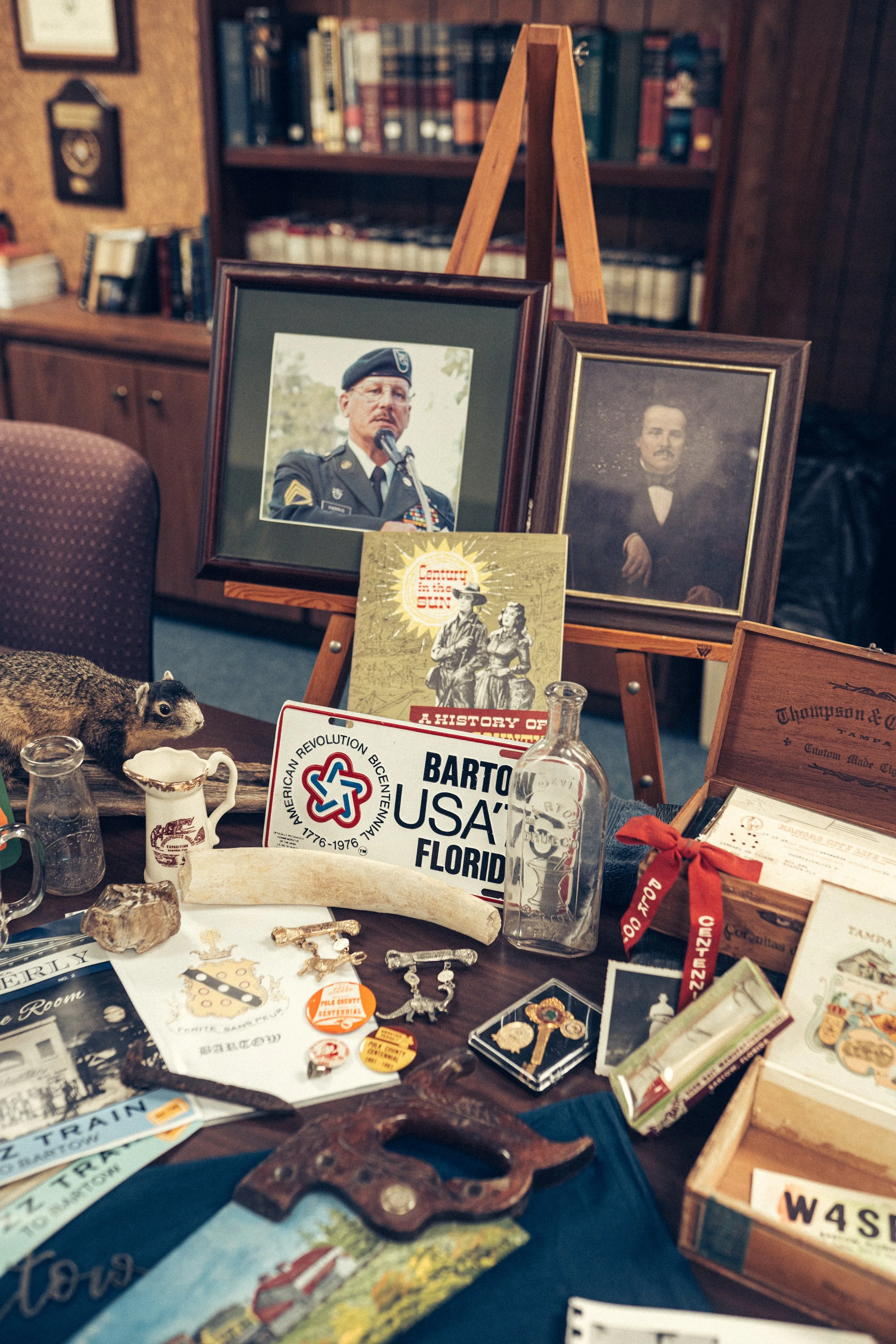
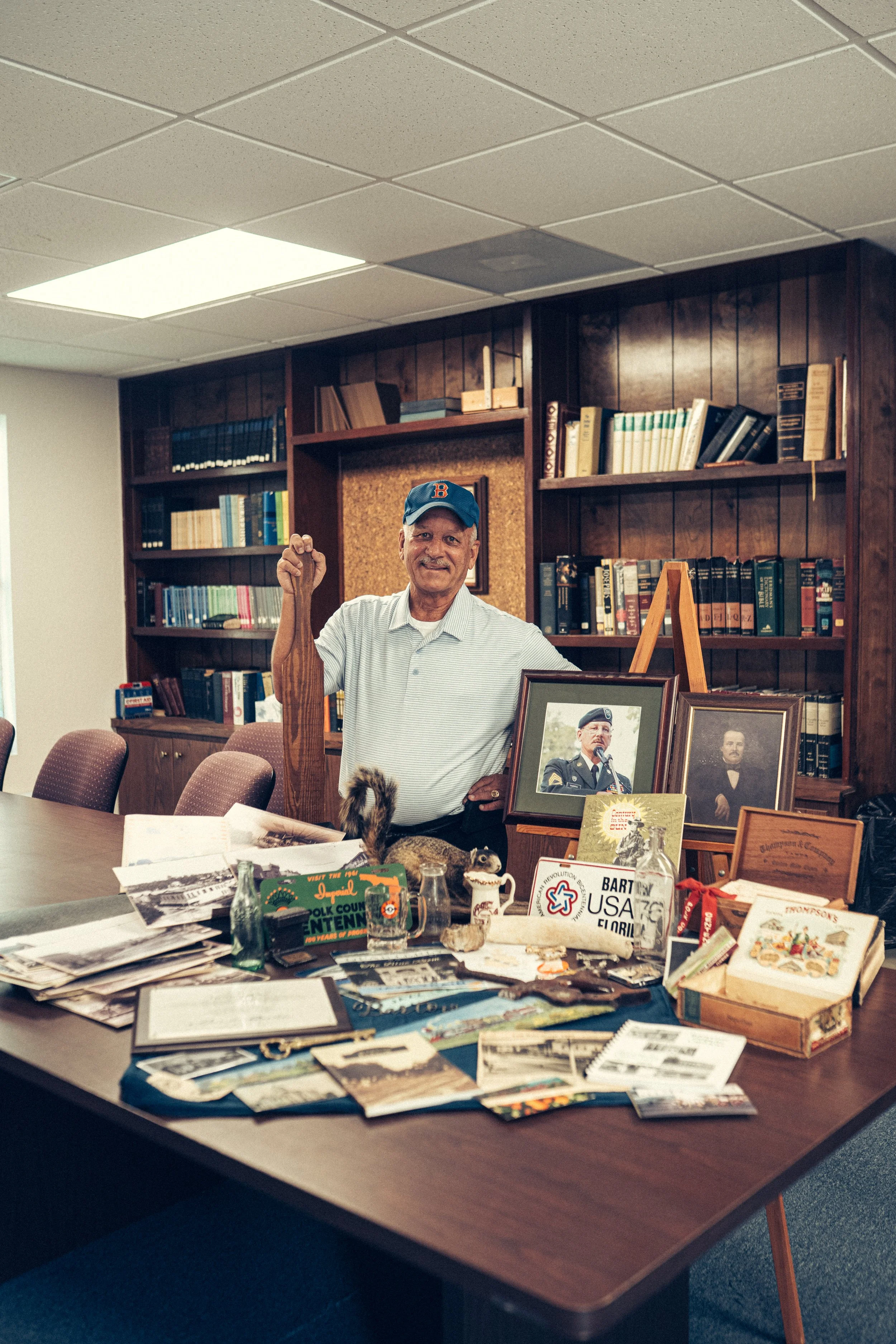
He developed another habit that has served him well: holding on to things.
Brochures. Maps. Photographs. Pamphlets. Those early collections became the beginning of what he simply calls his “files.”
School added another layer. Fourth-grade teacher Vivian C. Utsey filled her classroom with historical figures and themes, incorporating local stories into lessons about American and Florida history. Harris would absorb those stories at school and then return home eager to retell them to his family.
Later, eighth-grade teacher Elsie Dunn encouraged research, book reports and oral presentations. Dunn, a member of the Bartow Chapter of the Daughters of the American Revolution, brought local history into the classroom as well. One memorable visit came from Bartow’s Charlie Smith, who was celebrated at the time as America’s oldest living person and had formerly been enslaved. For Harris, the opportunity to hear from someone whose life reached so far into the past was unforgettable.
By then, he had begun to understand something that would become central to his life’s work: the past was all around him, if he took the time to notice.
“History was alive," he says, "if you looked for it!”

Polk County's Centennial Celebration included a parade in Downtown Bartow that played a pivotal role in Lloyd's keen interest in history.
A Bicycle, a Newspaper and a City Full of Clues
As a boy, Harris discovered another way to chase history through the local newspaper, the Polk County Democrat. Editor Loyal Frisbie and his wife, historian Louise Frisbie, helped keep Bartow’s past in the public eye through features on local history and interviews with pioneers.
Each week, Louise Frisbie published a “Pioneers” section featuring a photograph and caption. Harris would collect the articles and then hop on his bicycle and go looking for the places he had read about.
Sometimes those searches led him directly to older residents who were eager to share what they remembered with a young person who genuinely wanted to listen.
His father Lloyd A. Harris’s work in the phosphate industry provided another window into the evolution of Polk County. As a foreman and later through promotions in the mining industry he came to know people throughout the region. He would come home with stories about unearthed dugout canoes and mounds—and sometimes physical pieces of the past, including flint arrowheads and old bottles.
Old homesteads and early businesses became part of the family conversation.
While attending Bartow High School, Harris found what would become an important chapter in his education: Bartow’s Genealogical and Historical Library, located beside the Law Library at the courthouse.
Librarian Stevie Lou Powell introduced him to the world of local research.
There were no computers to speed the process along. Research meant reading, taking notes and going back to read some more. For Harris, it was an education in patience as much as history.
From Young Researcher to Keeper of the Past
That small library eventually expanded into something much larger.
With the support of the Polk County Historical Association, Harris became a first-year charter member in 1974. His involvement grew alongside the development of Homeland Heritage Park and the evolution of the county's historical collections.
Today, that lineage connects to the Polk County History Center and its Historical & Genealogical Library. That connection also provided Harris with a longtime collaborator in Myrtice Young, head of the Polk County History Center. Young has worked with Harris for 16 years, describing him as both “a genuine friend and valued advisor on local history” who, she says, has never failed to “deliver the story for every situation.”
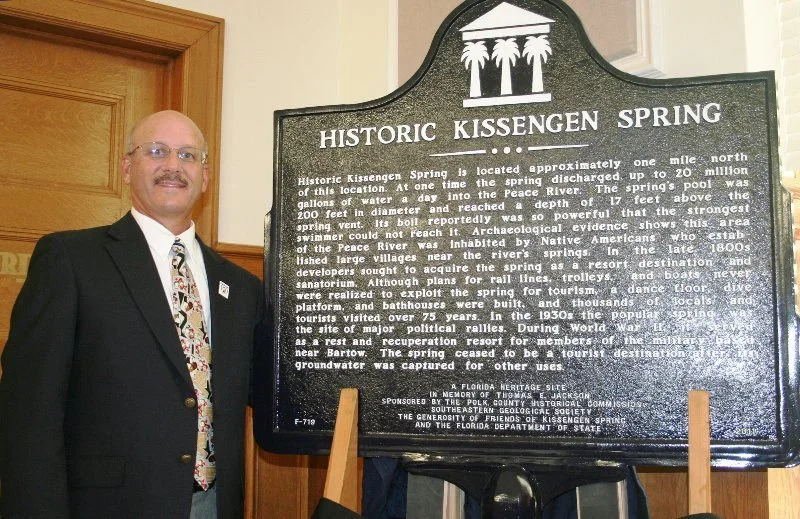
Over the years, Harris has contributed to historical markers and monuments, cemetery preservation, radio programs, newspaper and magazine articles, lectures and presentations. In 1996–97, he hosted “Imperial Moments: A Look at Polk’s Past” on WBAR Radio in Bartow. He also authored the book “Images of America: Bartow."
His work has never been limited to one particular kind of history. Genealogy, heraldry, architecture, cemeteries, family stories, civic organizations and seemingly ordinary remnants of earlier lives all offer clues to the past he cannot learn enough about. Today, Harris serves as historian for the Polk County Historical Commission and president of the Polk County Historical Association.
The Bartow Beneath Bartow
Ask Harris what he wishes more people understood about the city's history, and he does not settle on a singular event.
Instead, he points toward the whole picture: the people, places and moments that collectively formed Bartow.
Among the individuals who stand out most to him is Jacob Summerlin, a prominent 19th-century Floridian who became closely connected to early Bartow. Summerlin provided land, money and cattle to help sustain the community and contributed in ways that helped establish Bartow as the county seat. His generosity extended toward education, civic life and the beginnings of the city's spiritual institutions.
For Harris, Summerlin's importance lies not only in his wealth, but in the way he used it. That same attention to individual lives shapes the way Harris looks at the city itself.
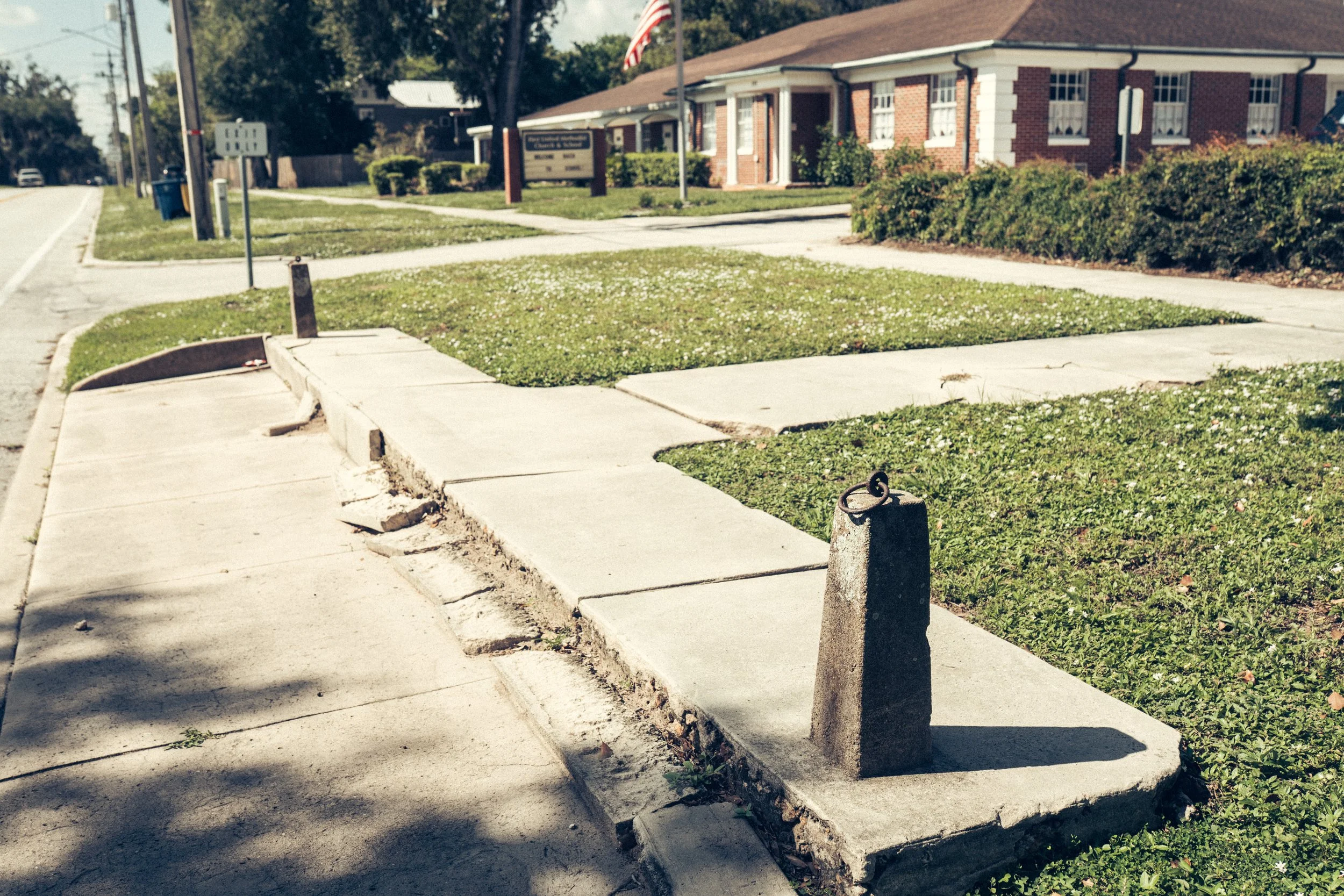
A casual walk along Main Street reveals remnants of another Bartow: horse hitches still attached to the streetscape, a carriage step, and manhole covers installed by a telephone company during a 1913 effort to connect the city to "modern communication" through underground cables.
The bricks along the 100 block of Main Street tell another story. Their sand and gravel composition reflects local manufacturing. The bricks were used in the construction of Bartow's first brick block following a devastating fire in the 1880s. Restaurants on either end of the block still offer a glimpse of those old materials.
Even a street name can open a door to another century. Dudley Avenue traces its name to pioneer Guilford Lord Dudley, bringing an English title into the everyday geography of Bartow.
And the large block behind Bartow's only Publix has its own surprisingly layered past. Long before it became part of modern Bartow, the area served as the Bartow Athletic Field, a gathering place for baseball and softball, and even Major League spring training, Halloween carnivals, turkey shoots and citywide barbecues. It was also home to a bank and small fast-food coffee and sandwich shops.
Go back even further, and the same land was a sand trail and Native encampment visited by the first pioneers in 1851.
That is the kind of transformation Harris loves to uncover: the old Bartow still sitting underneath the city people inhabit today.
From the Old Bartow to the Growing City
Harris considers himself fortunate to have experienced what he calls the tail end of the old Bartow.
In those days, the center of commercial life was concentrated around a handful of blocks near Main Street. Stores would close on Wednesday afternoons but stay open on Saturday evenings, to accommodate workers and travelers alike. Small family-owned grocery stores and neighborhood gas stations were common. Eventually, larger shopping centers shifted the way people shopped and where businesses gathered.
The phosphate and citrus industries that were once central to the region changed dramatically. Population growth brought more development, more traffic and an increasingly urban character.
The small town Harris knew became the city Bartow is today. But he does not speak of that transformation with resentment. Change, he recognizes, is part of the story too. What concerns him more is what can disappear quietly when a community grows faster than its collective memory. For Harris, Bartow's character can be distilled into three things: “faith, families and heritage.”
Telling The Tales
Lloyd Harris' enthusiasm for storytelling remains as strong as it was when he was a boy riding his bicycle around town.
Recently, he participated in the Bartow Public Library's America 250 salute through a series of short videos called Tales of the Town.
One of the most popular episodes was a walking tour of downtown. It was a fitting format for Harris. After all, much of his life has been spent doing exactly that—looking closely at familiar places until they reveal something unfamiliar.
A street corner becomes a clue. A brick becomes evidence. A tree becomes a story. A name becomes a connection. And a longtime resident's memory becomes a piece of the larger puzzle. The lesson extends beyond famous names.
Harris believes every family that has lived in Bartow has contributed something to the community that exists today.
“History doesn’t just end with the notably famous,” he says.
On the whole, Harris's work feels less like preserving a collection of dates and more like keeping a conversation alive.
Myrtice Young has seen that approach firsthand. Harris, she says, doesn't simply gather facts and content, “he also includes the personal aspects of the event, infusing his research with the emotions and details that bring history to life."
A Life Still Rooted in Bartow
History may be Harris's lifelong hobby, but it is only one thread in his life of service and being an educator.
He retired from the Army after 22 years of active duty and National Guard service, including work as a recruiter and Special Forces Weapons Sergeant, or Green Beret. He later became an Army Junior ROTC instructor at Bartow High School and Summerlin Academy, teaching Leadership Education for 27 years.
He holds a degree in administrative management and remains active with civic, historical, patriotic, hereditary and veterans' organizations.
His connection to the Bartow Public Library has lasted nearly as long as his fascination with history. Since becoming a proud card-carrying member in 1959, he has served on the steering committee that helped form the Friends of the Library and contributed to 100 Years of Reading in Bartow.
At home, his family remains part of the story. His wife, Sharon, and their adult children, Alex and Ginny, and his son-in-law Rusty Music, are among his chief supporters, as is his granddaughter, Lily Music.
He is also an elder and sings in the choir at First Presbyterian Church of Bartow.
Wherever life takes him, Bartow keeps finding its way back into the conversation. There is still more to research, more stories to record and more ordinary places waiting to reveal their extraordinary pasts. Harris knows there will never be enough time to tell all of them.
A city like Bartow cannot be contained in one book, one museum or one collection of photographs. Its history lives in the people who remember, the buildings that remain, the names on street signs, the bricks beneath restaurant walls and the trees that have outlasted generations. And it lives in the people who keep looking.
For Harris, the hope is simple: that the next generation will understand that history is not something distant or finished. It belongs to them, too. “It’s never too late to appreciate our past,” he says.
Then comes the reminder that might best sum up the philosophy that has guided him since that Centennial parade on the hood of his grandfather's Rambler:
“Today is tomorrow’s history.”
For a lifelong historian, Bartow is not merely a place he remembers. It is a story still being written.