Bartow’s Steadfast Steward
The Quiet, Purposeful Impact of Leo Longworth
Photos by Jordan Randall and provided by Leo Longworth
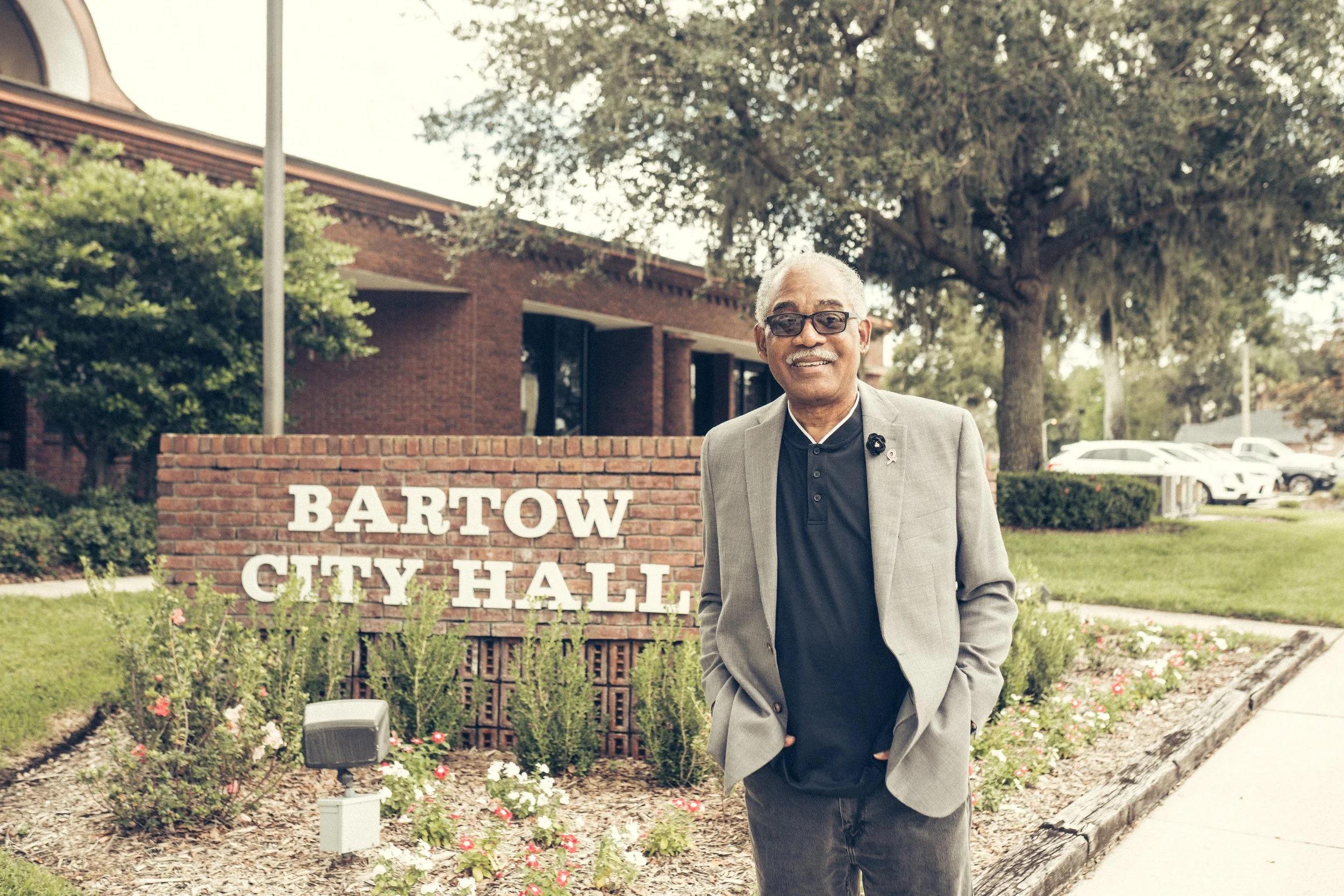
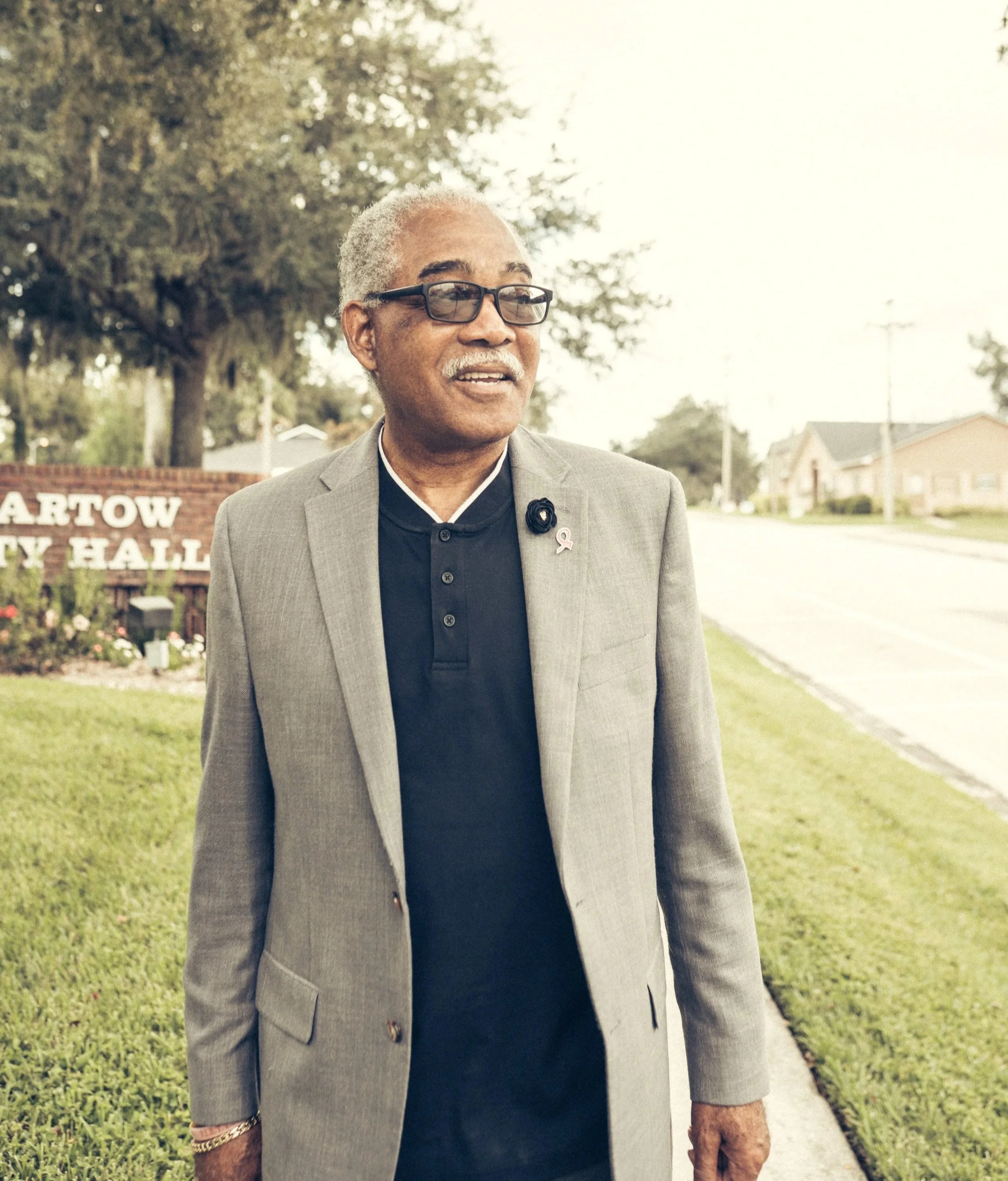
Leo Longworth, City Commissioner and Local Insurance Agent
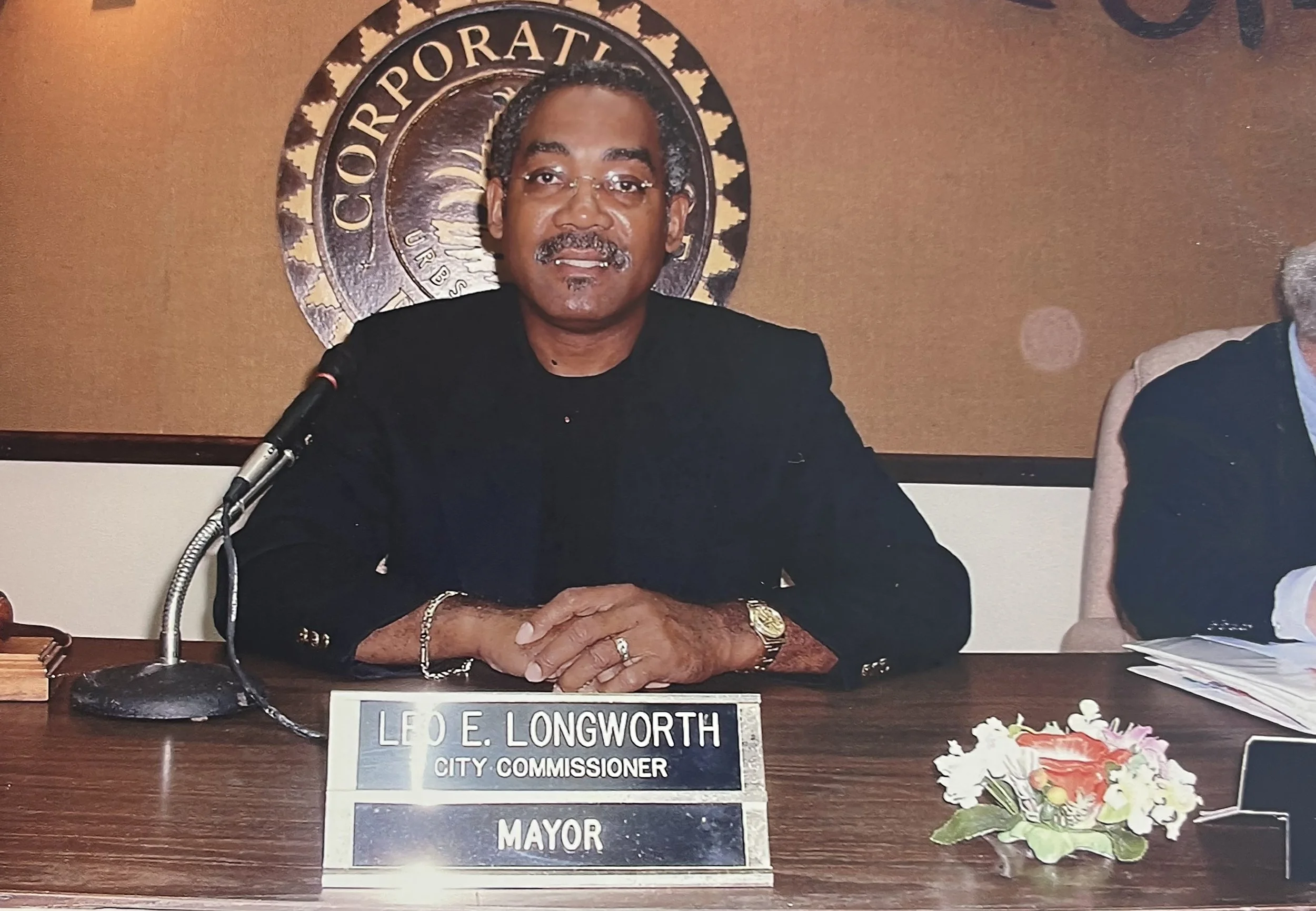
The Bartow City Commission chamber, a space where plans are laid and the future is often debated in the light of public scrutiny, might feel like a high-stakes arena for many. But for current City Commissioner and seven-time Mayor Leo Longworth, it feels more like home because in many ways it’s the natural extension of a life built on two simple principles: service and listening.
For nearly three decades, Longworth has been a steadfast presence in this room, a guiding hand through Bartow’s financial challenges, burgeoning growth and the crucial revitalization of its historic heart. Some might know him as the trustworthy State Farm agent who has been operating out of the same office for 38 years, some know him for his indelible track record as a public servant, and some might first think of him as a faithful longtime member of St. James AME Church.
Yet, to understand the quiet power of Leo Longworth—a man who requested not to be publicly recognized when the Community Redevelopment Agency launched the Banner Project in 2023 to honor local African Americans—one needs to look back much further than 1995 when he was first elected to the commission.
Leo loves to tell stories of growing up on the east side of town that was in some ways its own little haven to the black community during an era where racial segregation was still the norm. He and his family and friends weren’t able to enjoy the old theater on Main Street or some of the popular restaurants of the day because of their skin color, but he fondly recalls wonderful barbecue joints and places to pick up fried chicken, as well as a pharmacy and funeral home that served the black population well.
If you sit and converse with Leo long enough though, you also come to understand he gained a winsome understanding of how to have a backbone and still operate gracefully thanks to everyday citizens who were activists simply by the way they lived, including his grandmother, Mary Long.
Leo’s father tragically drowned when Leo was in elementary school, which required his mother, Carrie, to work long hours as a healthcare professional to provide for Leo and his two younger sisters. Therefore his grandmother, a longtime schoolteacher, spent a lot of time with him, teaching him much more than academics. She instilled a respect for language and a code of conduct. Even the simplest exchange was a lesson, on anything from correct pronunciation to proper etiquette.
In terms of showing Leo what it looked like to be an agent for change, she would tell him stories of how she pushed boundaries she believed were meant to be broken. For example, she once visited a then-Main Street establishment, John’s Restaurant, and sat down as a patron despite the fact the restaurant did not serve blacks.
“I always think it’s best to be slow to speak and quick to listen.”
“When the waitress approached her table, she offered a menu and took her order,” Longworth says. “And then, as she looked at the server again, the server realized she was black. My grandmother was fair skinned…and she was kind of a low-key activist and she did things like that to bring people together.”
Longworth was also molded by the teachers and staff at Union Academy. It was an all-black Rosenwald School—a program developed in 1917 by Julie Rosenwald, president of Sears, Roebuck and Company, and Booker T. Washington, president of the Tuskegee Institute, to improve educational opportunities for black students living in rural communities.
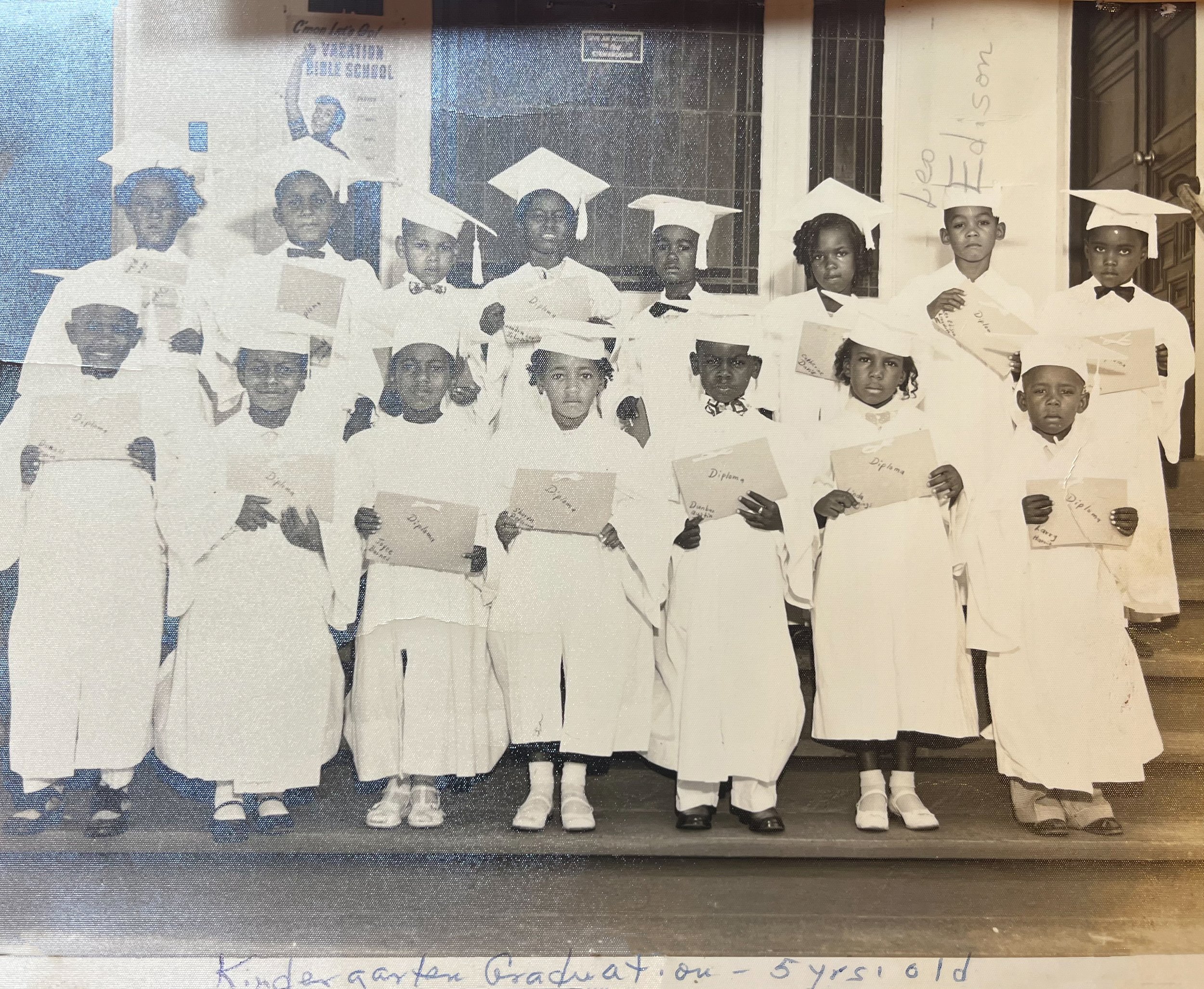
“Oh man, the food was so good. You know, soul food like collared greens, fried chicken, pork chops…” says Longworth, conjuring up a very elementary school answer.
But the education and mentorship he received was equally wonderful.
“We had teachers who cared about us and who were involved in our lives. It was a close-knit community where teachers were friends and family, and education was holistic, focusing on life skills and respect,” he says. “Even with secondhand books, the quality of instruction was high.”
Between his education and the fact that his grandmother often downloaded information to him about the city after she attended city commission meetings, Longworth was primed for a future of making important decisions as a representative of his community.
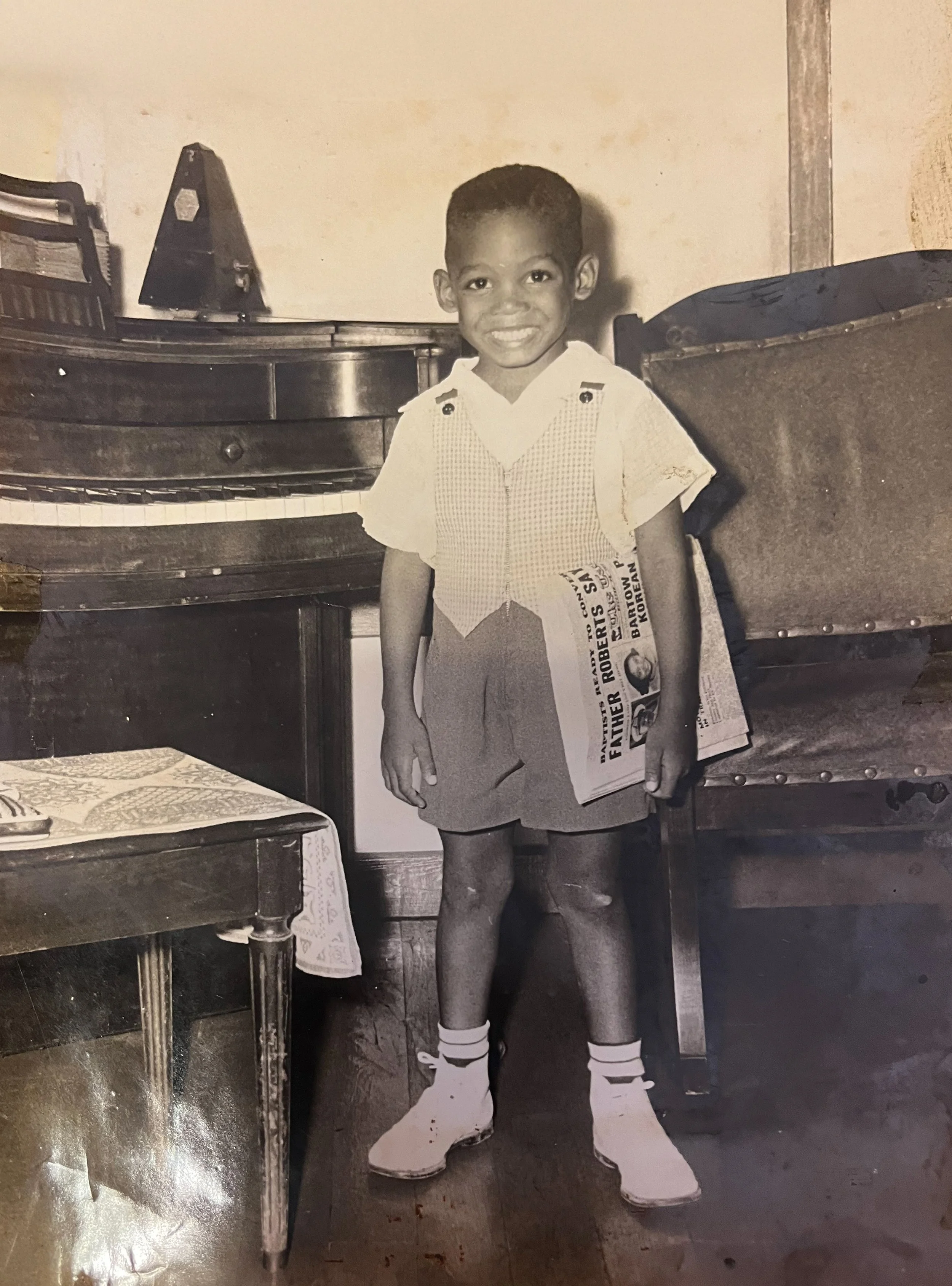
Leo Longworth has been a fixture in the Bartow community since his days as a vibrant, active and curious youth. He is a proud graduate of what is now called Union Academy, and at the time was called Rosenwald School.
“Just listening to her, that’s how I got involved with the government,” he reflects.
He not only quickly gained the trust of Bartownians, but he earned the respect of fellow public servants. Simply put, he and his wife, Pat Hadley Longworth, have been and continue to be community fixtures.
Longworth’s approach to governance is aptly described by John Murphy, a Bartow lawyer, who in 2018 presented Longworth with the George W. Harris Leadership Award.
“The leadership style of this low-ego individual can only be described as compassionate, leading with his head and his heart, and making decisions based on a respect for those affected by those decisions,” Murphy said in a 2018 article in the Lakeland Ledger.
That same year, Longworth was elected the president of the Florida League of Cities, a nonpartisan organization that brings together cities, towns and villages from throughout the Sunshine State.
If you bump into other civic leaders in Polk County you’re likely to garner a wide smile at the mention of Longworth. Former Lakeland City Commissioner Phillip Walker, also an insurance broker for decades, and also a former president of the Florida League of Cities, said he has fond memories of working with Leo back in the day when both were employed by Polk County.
Leo’s not loud or full of bravado. He’s intentionally thoughtful and he often refers back to Scripture when discussing how he engages with people, whether at work, in the commission chamber or at home.
When it comes time for his turn to speak during a city commission meeting, he measures his words carefully, usually to ask a clarifying question or to simply affirm the work of the city’s employees, whom he considers one of the city’s greatest assets. When a vote is called—even if he is on the losing side of a 3-2 decision—there is no lingering tension. He values the democratic process and the cooperative spirit of the five-person board, ensuring that at the end of the day, “we are still okay,” as he puts it.
In 2024, Census predictions came out that Bartow, which at that time still had less than 20,000 residents, could potentially double in “several years.” Whether or not that happens remains to be seen, but developers are seeking approval on the construction of nearly 3,000 new single family homes in the next decade through various projects.
The commission is hyper aware of the need to continually weigh the pros and cons of new development and growth and how it impacts existing infrastructure and cultural norms that have made Bartow what it is today.
As the historic town he loves evolves, Longworth said he is an ardent proponent of “smart growth.”
To him that means:
Attracting long-lasting, long-term jobs and the right kind of industry.
Preserving the small-town feel of the downtown core.
Revitalizing historic communities like the “East Side and West Side” (the city’s traditionally black and now multiracial communities), ensuring that areas like Main Street/Martin Luther King Boulevard are thriving with places to go and eat.
Investing in infrastructure, public safety, and, notably, “recreational activities...attractive to the citizens.”
He’s quick to give credit to the Community Redevelopment Agency (CRA) for “doing a great job” turning dilapidated properties into purposeful spaces and the consistent, daily work of city leaders to keep the city’s heart intact while planning for progress.
Leo Longworth may prefer the back seat to the limelight, but the footprint he has left on Bartow is one that has helped it move forward throughout all of his years.