On the Front Line for Children
How Heartland for Children is a Catalyst for Keeping Kids Safe and Helping Families Find Stability
Photos by Jordan Randall and Provided by Heartland For Children
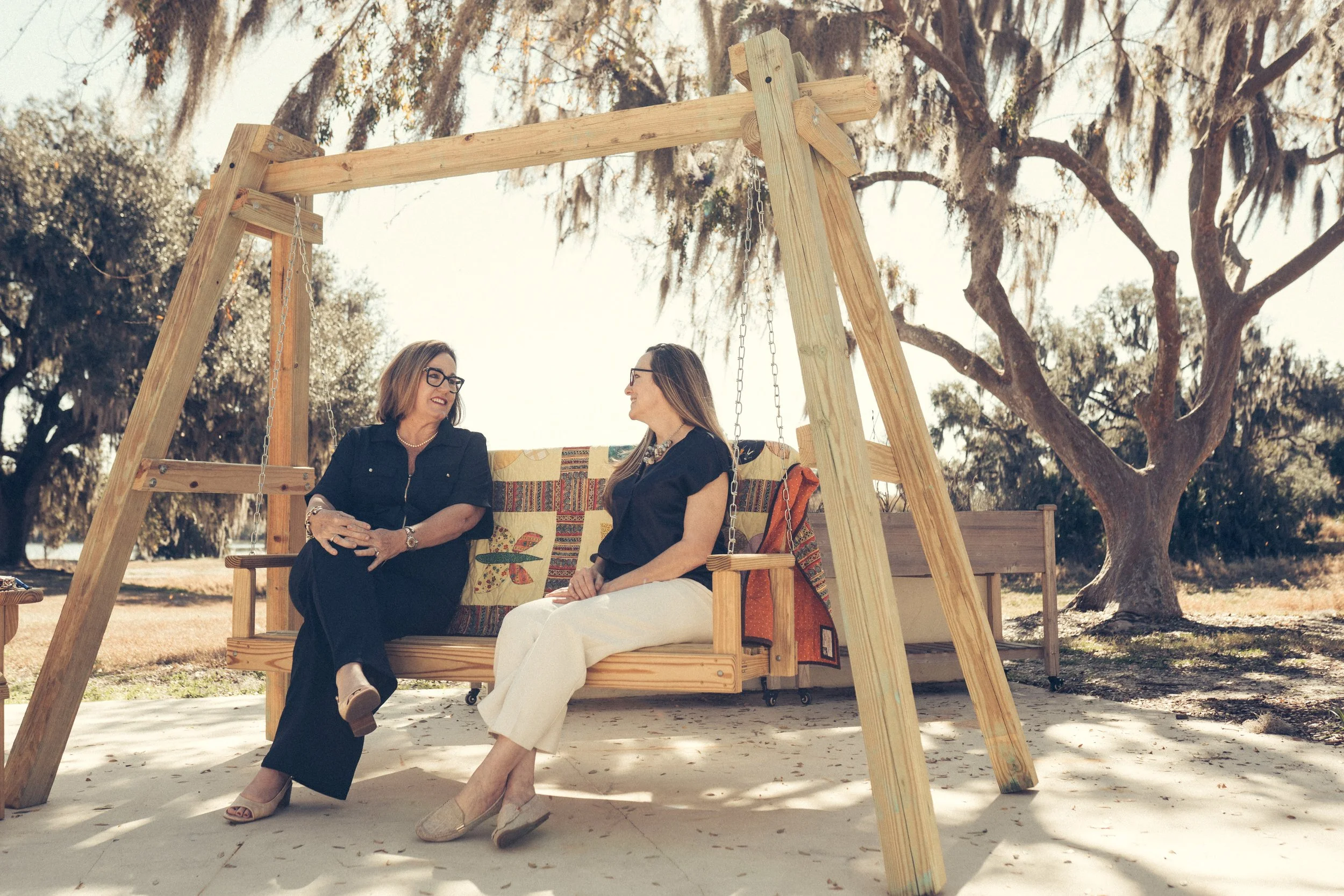
Kim Daugherty Heartland for Children CEO, Fawn Moore Heartland for Children COO
The moment you step into the home of Bartow residents Blanca and her daughter, Laneli, you’re met with vibrant signs of life: three high chairs, baby gates sectioning off the space and offering their dog a bit of privacy, toys and games scattered across every inch of the living room. It’s not what you would expect if all that you knew was a single mom working from home was raising her 15-year-old home schooled daughter there—but in the unexpected is where this inspiring mother-daughter tandem thrive, as evidenced by the impact they have made as a foster family, and soon to be adoptive family.
At age 12, Laneli connected deeply with a young girl who her aunt took in through foster care. She began presenting her case to her mom that a great way to make a difference in the community would be to welcome children into their home in the same fashion.
“I said no, it would be too much,” Blanca recalls.
But eventually, due to her daughter’s persistence—and most importantly, Laneli’s promise to help raise and nurture the children in their home—Blanca reached out to Heartland for Children to learn more about being a foster family and completed the training to get her home licensed.
In April 2024, they received their first placement, a two-day-old baby named Braxton*. Their journey quickly accelerated. In less than two years, the family has cared for 13 children, and is in the final stages of adopting three-year-old Jasmine*, meaning Laneli will have a sister for life.
“I love to help kids going through [family hardships] because then they don’t have to grow up thinking they’re not good enough…and they understand their worth and purpose,” Laneli says, grinning extra wide a moment later when she talks about picking up messes that twins they cared for would make regularly.
Building a Local Lifeline
Blanca and Laneli comprise one of hundreds of foster families, both relative and non-relative caregivers, licensed through Heartland for Children. Headquartered in Bartow, Heartland for Children is a command center of sorts for the emotionally grueling, constantly changing, but extremely rewarding 24/7 work of protecting children when they are unsafe and help is needed to find temporary placement solutions through foster care.
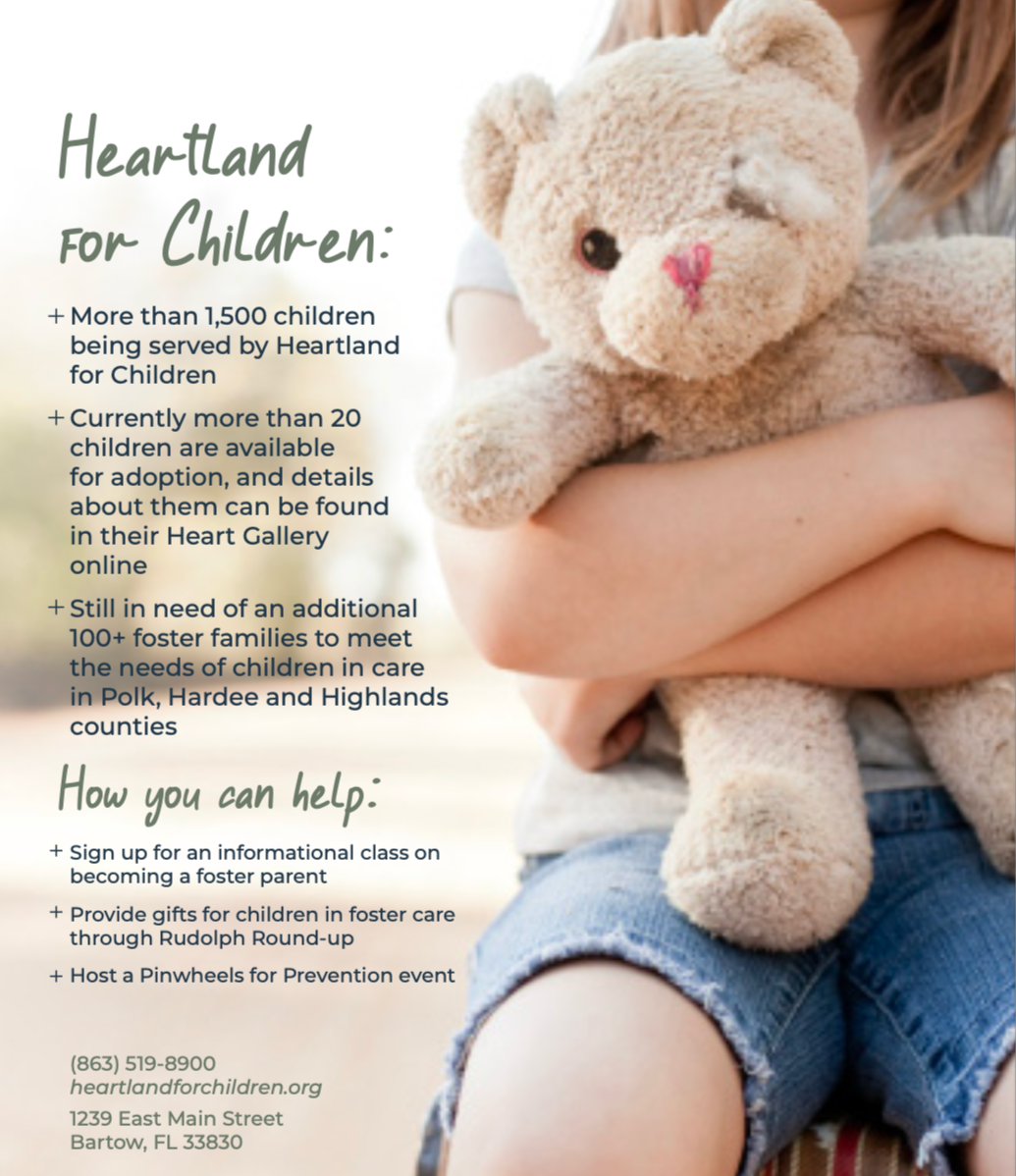
As the lead Community-Based Care (CBC) agency for Polk, Highlands and Hardee counties, Heartland for Children and its network of contracted providers are at the front line of Florida’s child welfare system, acting as a shield and lifeline for more than 1,500 vulnerable children currently. The daily work of case managers, licensing specialists, placement specialists and other uniquely gifted staff, advocates and partners helps transform chaos into calm and fear into belonging.
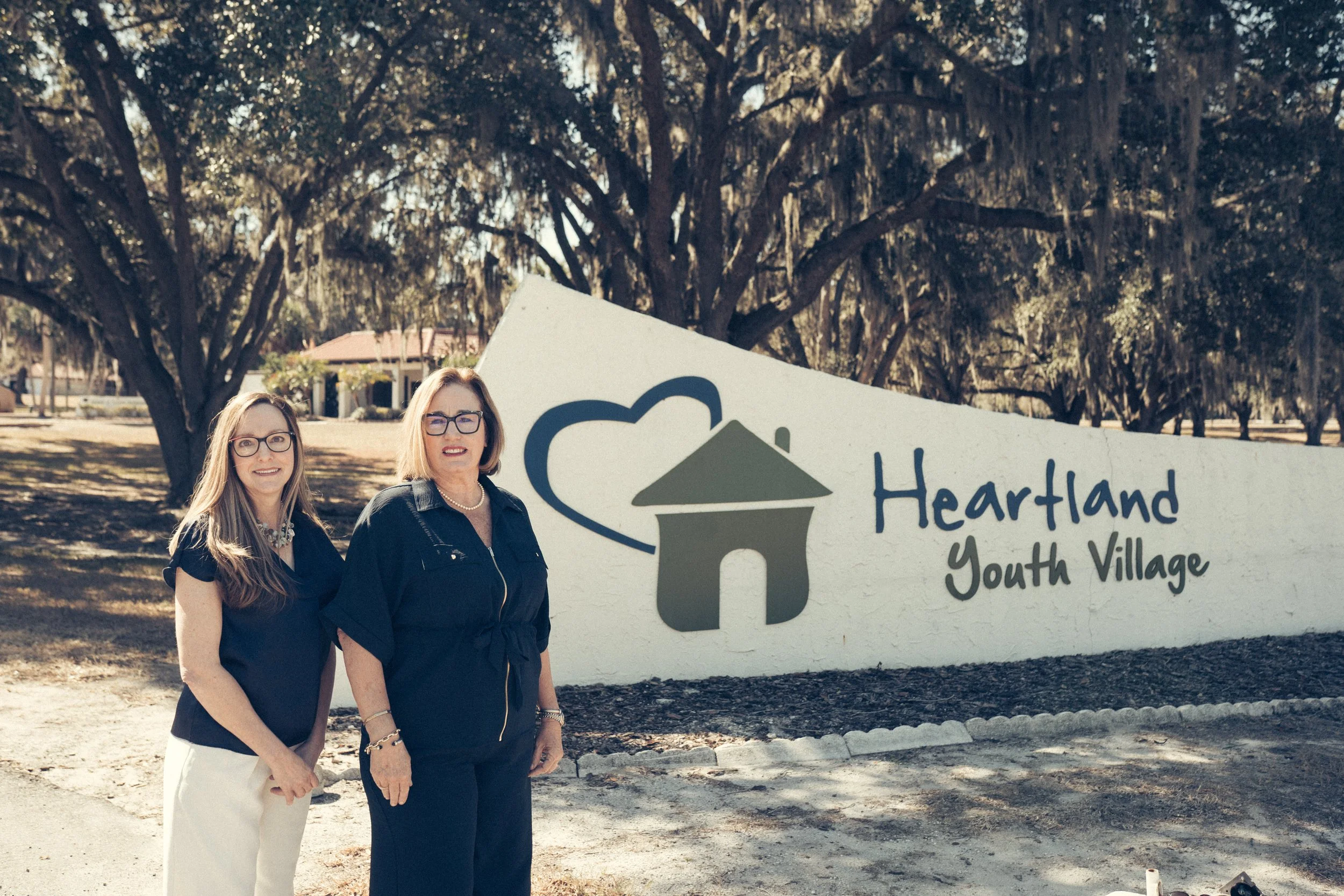
In addition to licensing traditional, therapeutic and medical foster homes, Heartland for Children contracts with more than 50 various service providers and group home providers to manage and operate group homes in the local community—like the ones on the campus of Heartland Youth Village off Highway 60 in Bartow.
Heartland for Children and local providers also advocate and join law enforcement in the fight against child human trafficking and work to prevent child abuse in our local community.
In 2003, when the Florida Legislature privatized child welfare services, Heartland for Children was selected by the Florida Department of Children and Families (DCF) to be the lead community-based care agency to manage the child welfare system in Polk, Hardee and Highlands counties. They have continued to be the lead community-based care agency ever since. This is a testament of performance and the belief that this work must be rooted in the community it serves. While DCF is responsible locally and statewide for child abuse investigations, Heartland for Children and its providers are contracted to be the local administrator for the local child welfare system, which includes the foster home network.
As CEO Kim Daugherty explains, the local community-based care system is set up to get things done effectively and efficiently in moments when time is of the essence: “We don’t have to go up five levels of approval. We can make local decisions and get resources and support in place for children and families now.” If staff call needing a crib for a family, they can literally make arrangements to get the needed resources “within minutes.”
Taking on Trauma
To understand the work Heartland for Children navigates one first must understand the impact violence and child abuse has on children and teenagers. Childhood trauma impacts the brain and can last a lifetime. The staff, the contracted service providers, case management and especially the caregivers are trained to understand why children and teenagers may be demonstrating certain behaviors or have certain needs based on the trauma they have experienced.
“You can see behaviors and how children and teenagers are responding to situations based on their past trauma,” Daugherty explains. “Unlike a broken bone, the damage of early childhood trauma is invisible, but it manifests in raw, disruptive behaviors. It’s the child who doesn’t know how to sleep because they’re used to sleeping ‘with one eye open’ because they don’t feel safe, it’s the teenager whose survival mechanism is a ‘fight, flight, or freeze’ response.”
Heartland for Children COO Fawn Moore notes that during a crisis families are not in the mindset to figure out how to cope—they may need intervention and support. The staff and caregivers are the ones who must respond to behaviors and the hurt after trauma has occurred. Staff are constantly going through continuing education classes and many of them are extremely well versed in trauma-informed care approaches and have been trained in Trust-Based Relational Intervention (TBRI) strategies.
“Love to help kids going through [family hardships] because then they don’t have to grow up thinking they’re not good enough...and they understand their worth and purpose,”
Blanca credits Heartland for Children with preparing her for the role of being a foster mother. She said the knowledge imparted to her has been invaluable, and she quickly learned that fostering was far more than an “idea,” preparing her not just to care for children, but to support their biological families as well. “Our licensing specialist, Cynthia, has been an immense source of strength, consistently reaching out to ask what the family needs and providing emotional support through difficult personal times.”
Foster parents, much like educators, are taught how to keep a child’s environment regulated so that a child’s cortisol levels—their constant state of stress—can finally go down. As Daugherty puts it, the work is never about fixing a “bad child” or “bad teenager,” but is focused on adults’ responses to the child so that the relationship is one that is supportive, calm and healing.
Foster care is navigated as a temporary placement option, and the goal should always be reunification with the birth or natural family, as long as parents and family members do everything necessary to utilize the services and support provided to ensure a child’s safety.
Heartland for Children’s leadership team is extremely proud that more children than ever are being placed with relatives and non-relatives if a child must be sheltered from their parent(s) due to safety concerns. These caregivers are equipped and provided with the resources to care for them. As of the second quarter of the 2025-26 fiscal year, Heartland for Children ranked number one amongst all lead agencies in Florida in percentage of children placed with relatives and had the least number of placement moves per 1,000 days in foster care, 2.86.
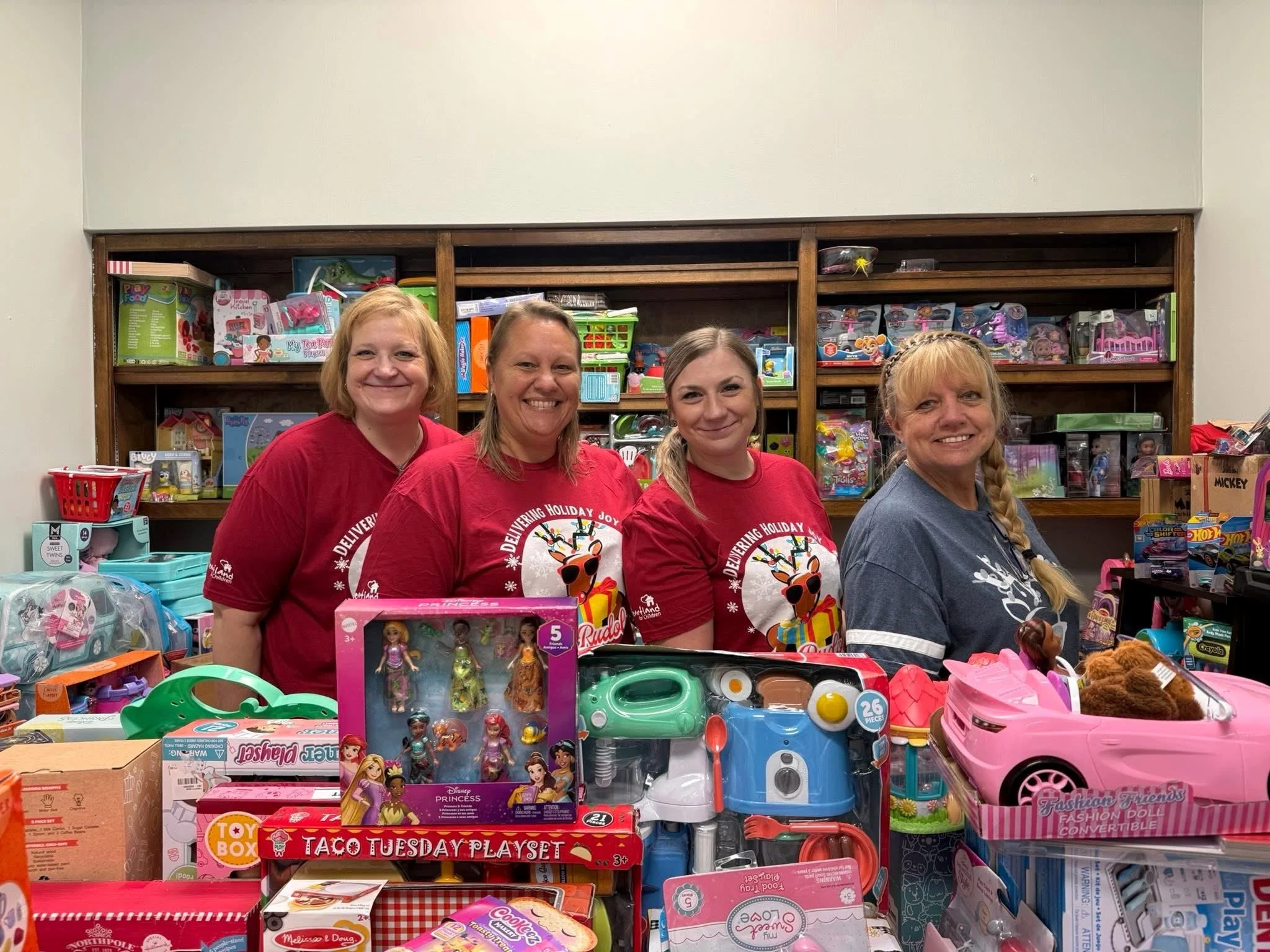
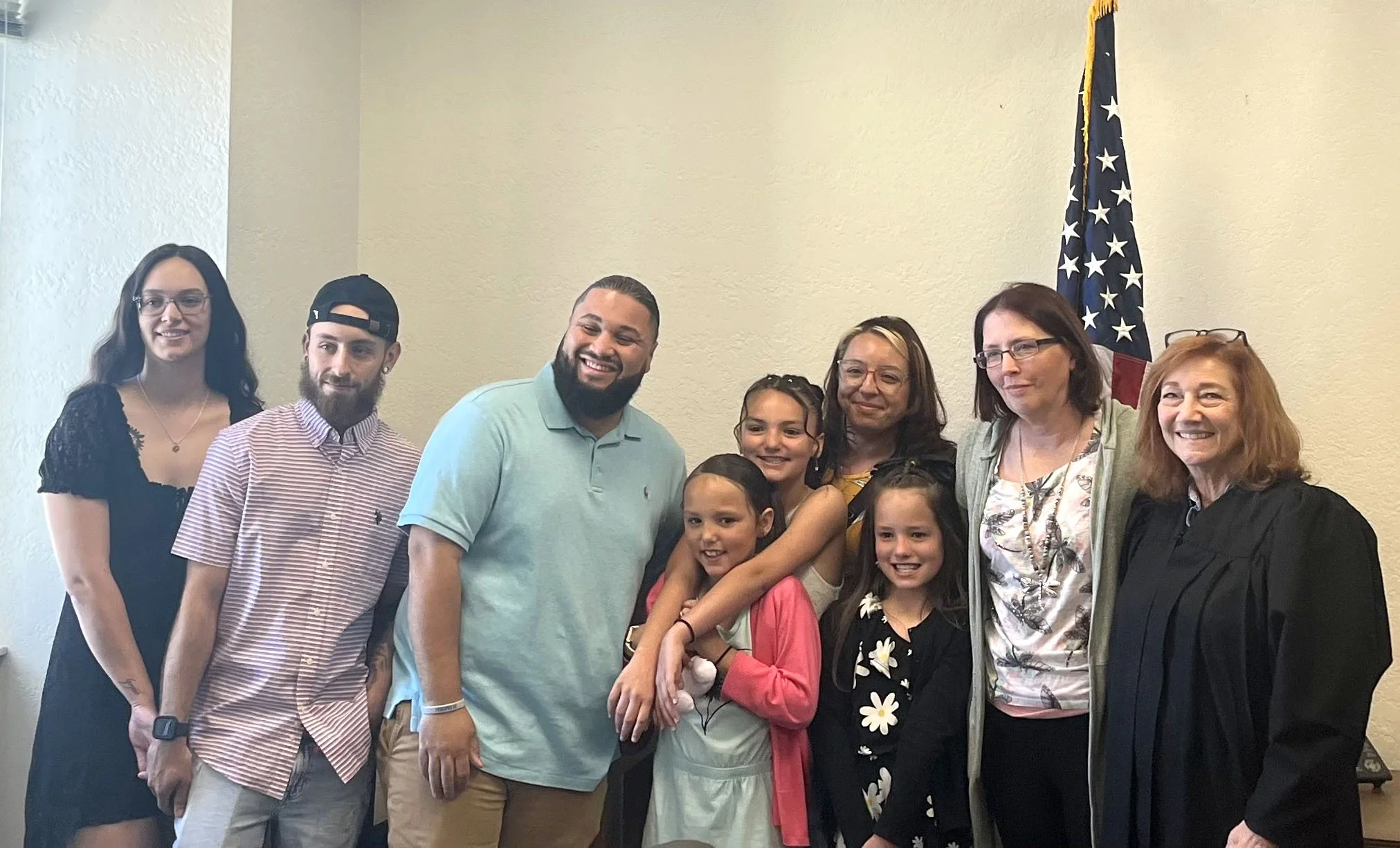
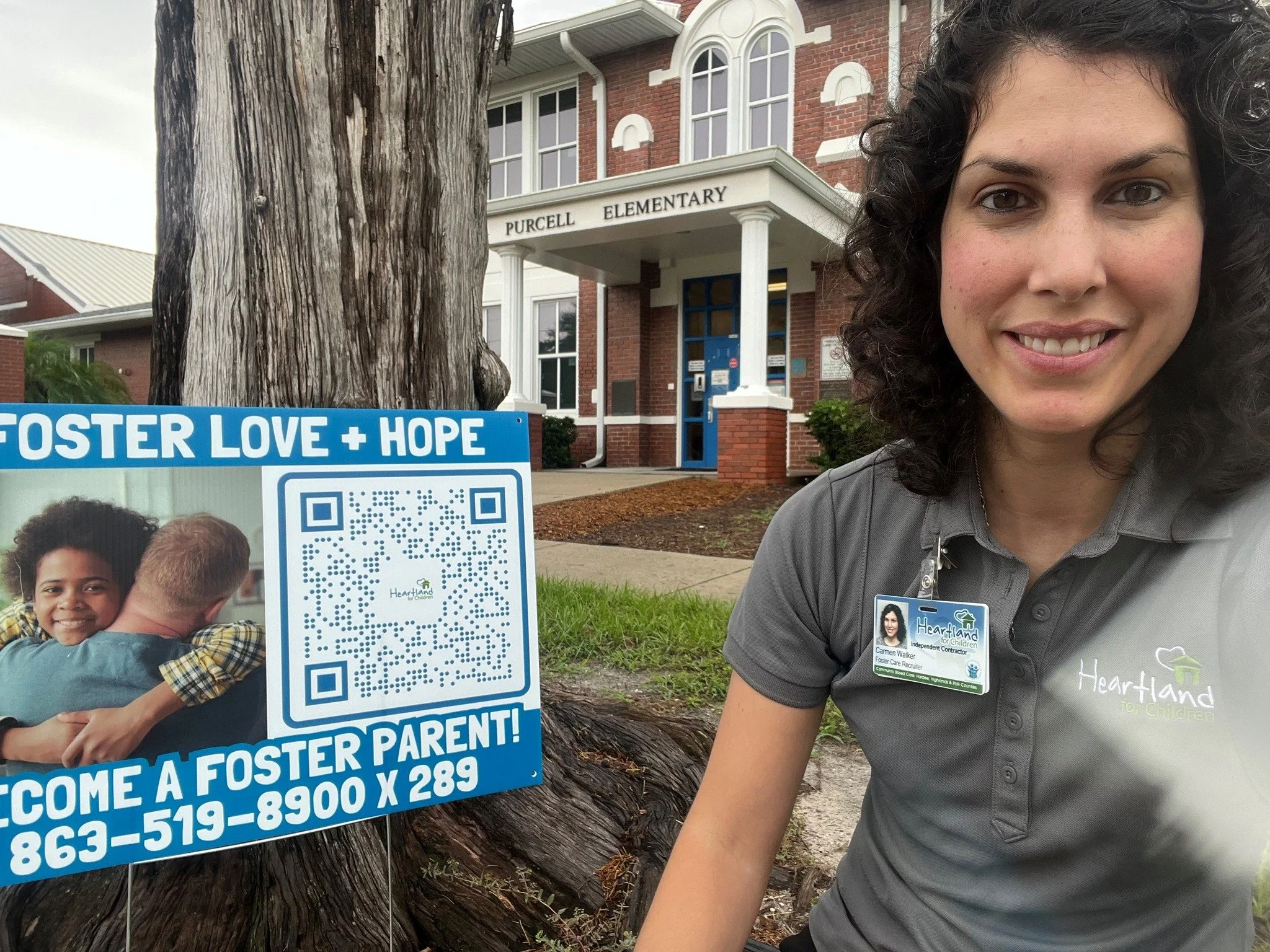
A joyful adoption day is part of the journey for some foster families. For all families in the foster care system, events like Rudolph Round-Up Toy Drive and ongoing recruiting events help keep the reality in front of community members, including ways to help.
Daugherty has a background in child development and child and family services— she worked at Texas Children’s Hospital in Houston, Texas when much of the early brain research in children was being completed by Dr. Bruce Perry who is a neuroscientist and child psychiatrist who studied the impact of trauma on children and adults. Over the years this type of research and trauma informed training has helped her understand the importance of offering quality evidence-based services to children and families within the child welfare system.
Moore brings a gritty determination that comes from working investigations for years, and she also deeply resonates with some of the challenges parents face. An alumna of University of South Florida, her career spanned 13 years at the Pasco County Sheriff’s Office, where she rose from a frontline Child Protective Investigator (CPI) to Assistant Director. She also served in various leadership positions at DCF. But her most profound education came when she had to leave a high-level role to navigate the convoluted menu of services offered to try and help her autistic adult son. That experience—moving through the system as a vulnerable parent—gave her an intimate, painful understanding of how complex systems are and it fueled her belief that parents in crisis need support navigating them instead of judgment.
“I know the systems, and I know how to navigate them... I can’t imagine navigating when you have not worked in the field. It does make me reflect on how hard it must be for others due to its complexity at times,” she says. “I know many families are two paychecks away from being in difficult situations that could lead to a child safety situation. These moms and dads love their children. They get in situations and make bad decisions for a lot of different reasons, but usually it’s not because they don’t love their children.”
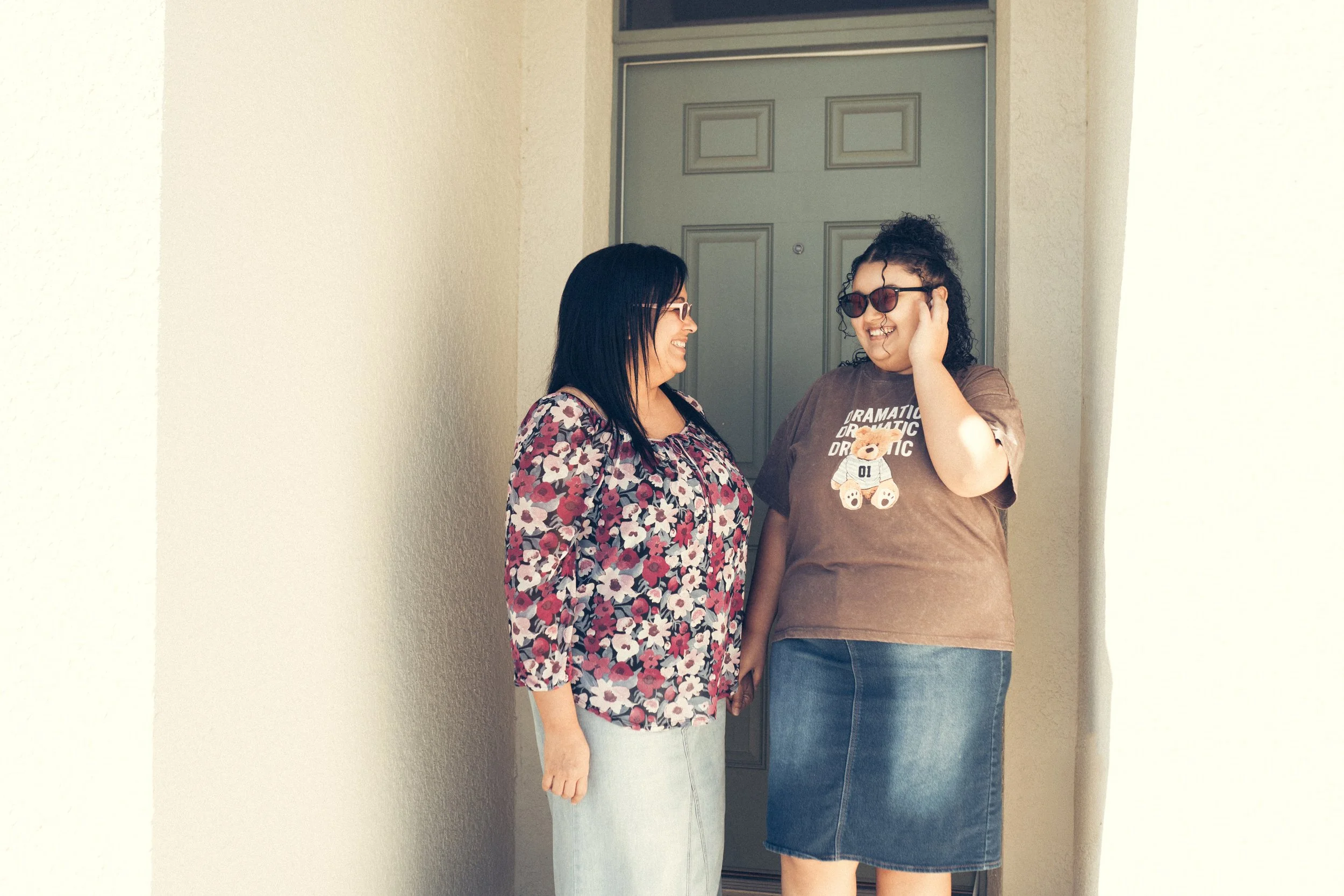
Blanca, Foster mom
Laneli, Foster sister
The Florida Legislature’s initial vision of CBCs partnering with the community at-large to prevent child abuse and support children and families in foster care has come to life.
Community support happens when local businesses come together for back-to-school events and the annual Rudolph Round-up Toy Drive, where local donors and businesses generously make it possible for more than 1,500+ children to have their wishes come true each holiday season. Throughout the year, many churches work alongside case managers to assist and provide resources for families in crisis in a variety of ways.
Daugherty smiled when talking about how one local donor recently gifted a group of foster children a memorable day of saltwater fishing in Clearwater.
There are plenty of smiles and celebrations, including happy adoption days in courts, that stem from the work, but there are also 2 a.m. phone calls with heartbreaking situations when children are sheltered from harm. Daily, staff are navigating the reality of a complex system, working diligently to improve it and responding to the crises of families.
DCF has a target goal of achieving permanency—either through reunification or adoption by a relative or non-relative—within 12 months of a child entering care. During the 2025-26 fiscal year, roughly 30 percent of 7,493 entering care statewide were in what is commonly referred to as “a forever home” within a year. Heartland for Children met that goal for more than 33 percent of the children in its care. Heartland for Children has an adoption goal of 230 children this fiscal year, and is well on the way to meeting this goal by June 30.
Help Needed
To meet the current needs in Polk, Highlands and Hardee counties, Heartland for Children still needs another 100+ plus foster families, including individuals to live at and care for children and teens at two of the Heartland Village homes on the Bartow campus.
As Laneli and Blanca openly share, being involved in foster care not only changes the lives of children, but it will change yours as well.
Blanca gets emotional sharing how one of the children she cared for recently imitated her, kneeling down to pray in a church service, reminding her that “God has a purpose in all their lives.”
Becoming a foster parent begins with going to an informational class online or in person and then completing the mandated training courses. For those interested in adoption, there is the Heart Gallery, where currently more than 20 youth, primarily teens, in foster care are eagerly waiting for someone to read their story and offer the possibility of a forever home. Information on foster care and adoption is easily accessible at heartlandforchildren.org.
“At the end of the day it’s not about seeing kids go to a perfect family,” Moore says, “but to a family that can provide support, safety and to really see their potential so they can heal from their past trauma. They can thrive in a foster home and the resilience we see in these children is unbelievable.”
Daugherty shared the greatest need Heartland for Children has is additional quality foster homes. People interested in learning more about fostering, should call 863-519-8900 ext. 289.
*Names denoted with asterisks have been changed to protect the individual’s privacy.