
The House that Testifies
Uncovering and Appreciating the Legacy of L.B. Brown
Photos by Jordan Randall and provided by Chuck B. Warren
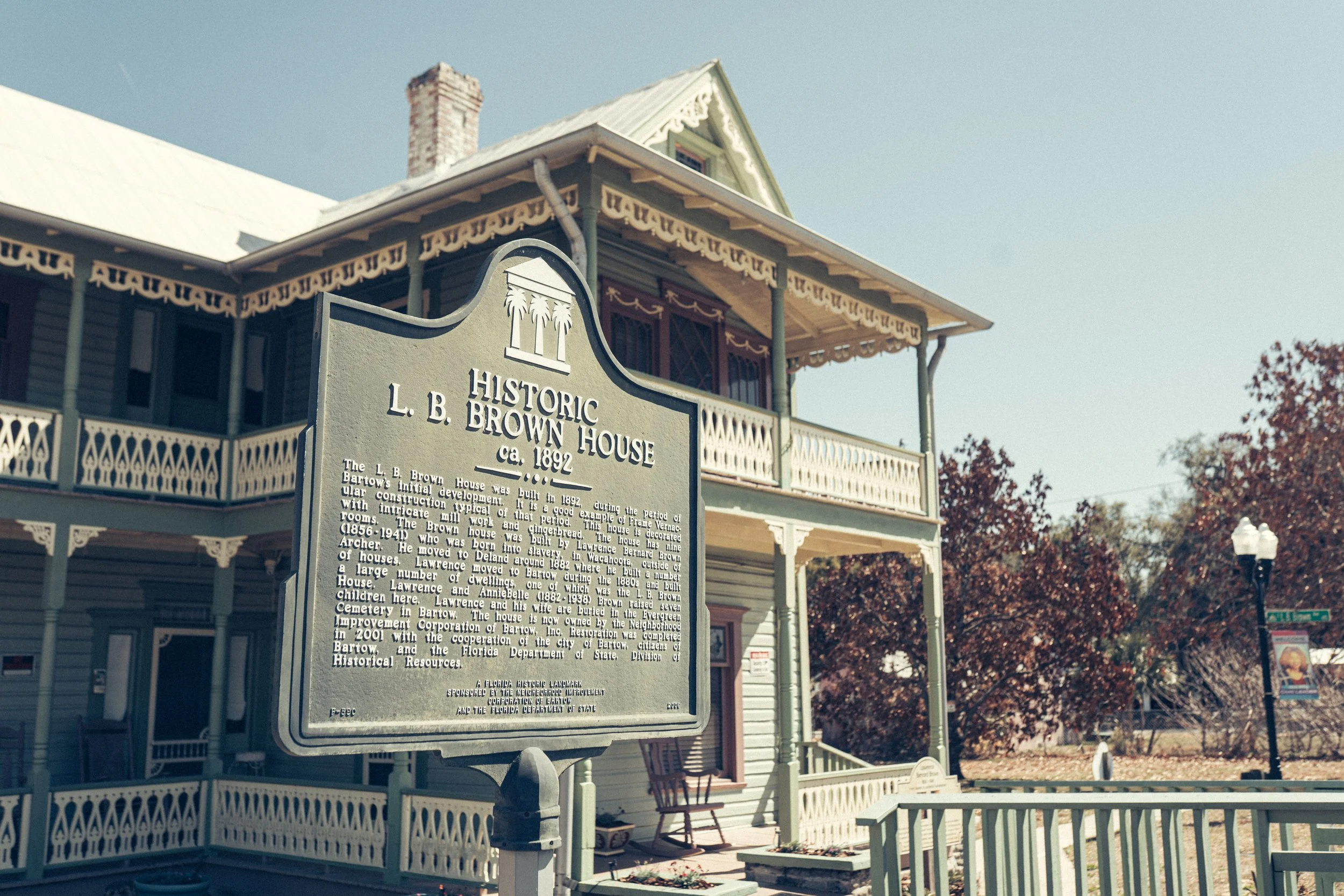
In the heart of Bartow stands a house that was nearly forgotten.
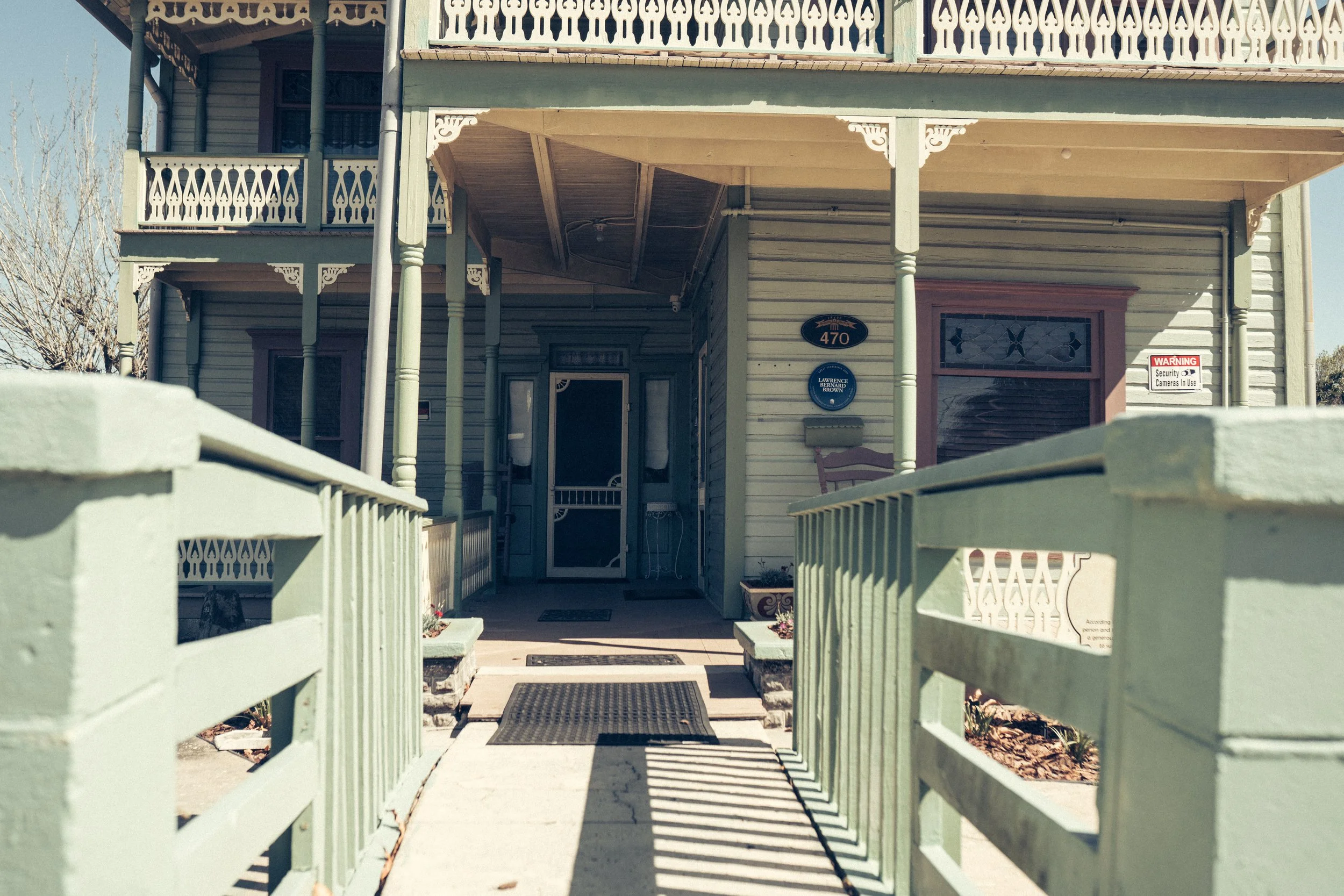
On 470 S. L.B. Brown Ave. in Bartow, Fla., sits a house with verandas that stretch wide, its green frame rising two stories above the quiet street. Masonry pillars bear carved initials “L.B.B.” quietly announcing the man who built it. For years, locals referred to it as “the Mrs. Thomas house,” named for the last resident to live and die there. Mrs. Thomas, a daughter of Lawrence and Annie Bell Brown, had inherited the home after marrying Mr. Thomas. To many, it was simply an aging structure—pleasant enough, perhaps even charming, but nothing extraordinary.
They were mistaken.
The house was built in 1892 by Lawrence Bernard Brown—a man born into slavery on September 12, 1856. Freed at the age of 9 at the end of the Civil War, Brown entered adulthood in a world openly hostile to Black men. Yet he would become an entrepreneur, inventor, builder, landowner, philanthropist and community leader. His two-story Victorian home, now the Historic L.B. Brown House Museum, still stands as physical proof of what he achieved.
Chuck B. Warren, author of “From Slavery to Community Builder: The Story of L.B. Brown,” remembers when the story of the house began to resurface. It was the late 1990s, around 1997, when Clifton Lewis introduced him to the restoration effort. Lewis, Director of the L.B. Brown Heritage Festival, was managing the project and invited Warren to serve on the Board of Directors. Warren, long aware that Black history had been neglected in public education, felt immediately drawn to it.
Clifton Lewis was a beloved Bartownian, community leader and tireless champion of Black history who devoted decades to preserving and promoting the legacy of the L.B. Brown House. As founding president of the Neighborhood Improvement Corporation of Bartow and director of the L.B. Brown Heritage Festival, he helped ensure that Brown’s story and broader African American heritage in Polk County would be remembered and celebrated for generations. He died at the age of 82 in November 2025 after a battle with cancer, leaving behind a profound legacy of preservation and education.
“The house is a wonderful example of one man’s perseverance and success after having had a difficult beginning,” Chuck Warren reflected. Born enslaved, Brown taught himself the trades that would make him a master carpenter and real estate developer, eventually becoming one of the most respected and successful businessmen in his community. That arc—from enslavement to master builder—resonated deeply.
The turning point in the house’s preservation came unexpectedly. During the early stages of restoration, it was not widely known that Lawrence B. Brown had built the home himself. Robert Brown—the youngest and only living child of Lawrence and Annie Bell Brown—heard about the work being done. He flew from New York to learn more about the house he had grown up in. In conversation with Clifton Lewis, he casually remarked, “When my father built this house…” Lewis, stunned, asked him to repeat it. “Oh yes. My dad built this house.”
That moment changed everything.
Further research revealed that Lawrence B. Brown had built approximately 60 homes in Bartow. The house was no longer just an aging Victorian—it was the surviving work of a formerly enslaved master craftsman who had helped shape the physical and economic landscape of his town.
Inside and out, the house bears evidence of Brown’s skill. He created ornamental wood carvings throughout the home, he silvered his own mirrors and he made furniture. Personal artifacts, ledger books and public records remain connected to the site, grounding the story in documented history. Today, visitors can schedule guided tours by appointment or walk the grounds independently, tracing the lines of craftsmanship that have endured for 134 years.
Preserving the house has required vigilance. On January 21, 2026, the museum completed a necessary dry wood termite tenting treatment to protect the structure. The work was undertaken to ensure the 1892 home survives well into the future. The message is clear: history must be actively maintained.
The house’s importance extends far beyond Bartow. In 1998, the Florida Department of State and the Florida League of Cities created the Great Floridian 2000 program to recognize individuals who made significant contributions to the state’s history and culture. Lawrence B. Brown was selected as one of 385 honorees.
National recognition followed. On December 9, 2013, Dr. Deborah Mack, the Smithsonian Institution’s Director for Community and Constituent Services, visited Bartow on behalf of the National Museum of African American History and Culture to accept a foundation stone made by L.B. Brown that bore his initials. When the museum opened in Washington, D.C. in 2016, Brown’s story and that stone became part of its inaugural exhibits—permanently displayed among 350,000 square feet of artifacts honoring African American contributions to the nation.
“The house is a wonderful example of one man’s perseverance and success after having had a difficult beginning.”
La Fleur Paysour, spokesperson for the museum, underscored the rarity of the site: few homes built in the late 1800s still tell their story through original architectural elements and preserved objects. Brown himself, she noted, embodied resilience and entrepreneurship.
Gloria McCoy, Chairman of the Board of Directors of the Historic L. B. Brown House Museum for 26 years, has been part of the effort from the beginning, when the project operated under the Neighborhood Improvement Corporation of Bartow, Inc. For her, the house is deeply personal. “The people who lived in that house were important to me,” she said. “The house is a symbol of what a genius Lawrence Brown was.”
Brown had only a third-grade education; he was self-taught. Yet in 1878, at age 22, he left his parents’ homestead in Archer, Fla. and moved to Spring Gardens in Volusia County. There he met Uriah Bennett—a Confederate Army veteran, Primitive Baptist pastor and postmaster. Bennett introduced Brown to a land developer who taught him how to purchase land, divide it into lots and build homes to sell. Bennett later sold Brown five acres, where he developed his own neighborhood before eventually relocating to Bartow.
He married Bettie Washington in Spring Gardens; Bennett performed the ceremony. Records do not reveal what became of her, though it is suspected she may have died during childbirth. Later, in Bartow, Brown built the now-acclaimed 1892 home and raised his family there.
The rediscovery of Brown’s story has altered local memory. Chuck Warren believes that once the house’s history was brought to light, it set a tone in Bartow. Today, parts of the city are decorated with banners celebrating the leadership and achievement of Black men and women, visual acknowledgments that contributions once overlooked are now recognized. Each year, the annual L.B. Brown Festival in Bartow further honors this legacy by bringing the community together to celebrate the life, work and enduring impact of Lawrence Bernard Brown.
Patricia Smith Fields, museum assistant, calls Brown’s story compelling and essential. Born under slavery, facing countless obstacles and no formal education, he became a respected entrepreneur and philanthropist.
“His story is important not just to the City of Bartow,” she says, “but to our nation.”
It is evidence against the false assumption that formerly enslaved people left little mark on their communities. It stands against historical omission, it testifies.
If the house had been lost, Bartow would have lost more than architecture. It would have lost a tangible link to a man who refused to accept the limits imposed on him. It would have lost carved woodwork shaped by hands once bound. It would have lost ledger books and foundation stones and initials pressed into masonry.
Instead, it has a museum, a story reclaimed and in the quiet strength of that Victorian façade, it has a reminder: history does not disappear on its own.
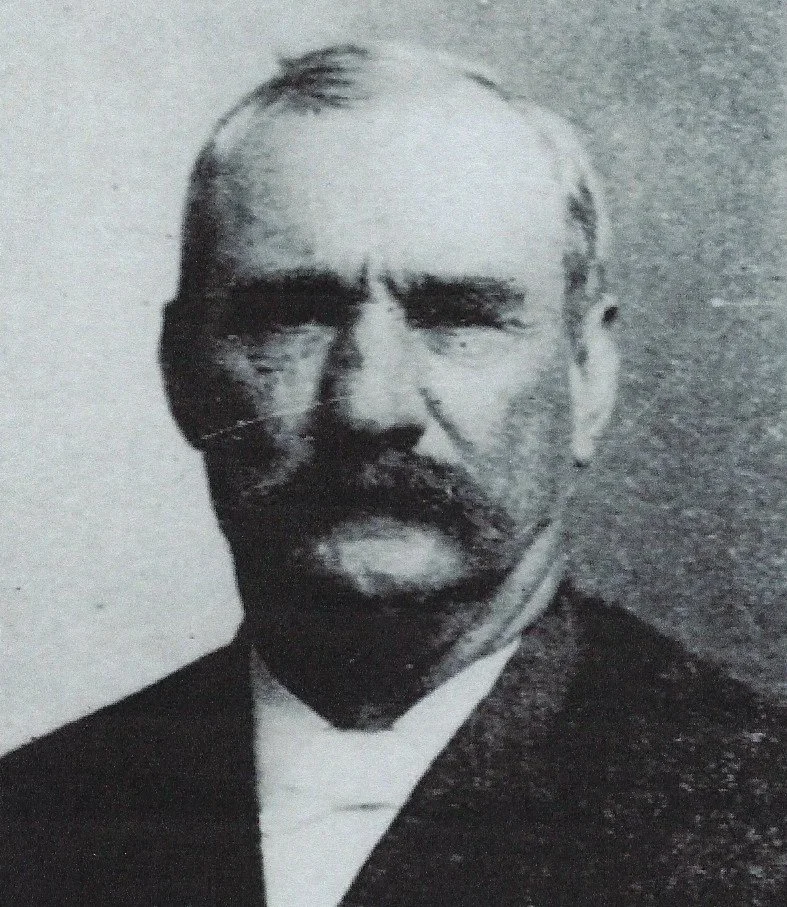
Uriah Bennett, a Confederate Army veteran , Primitive Baptist pastor and postmaster, introduced L.B. Brown to a land developer who mentored him.
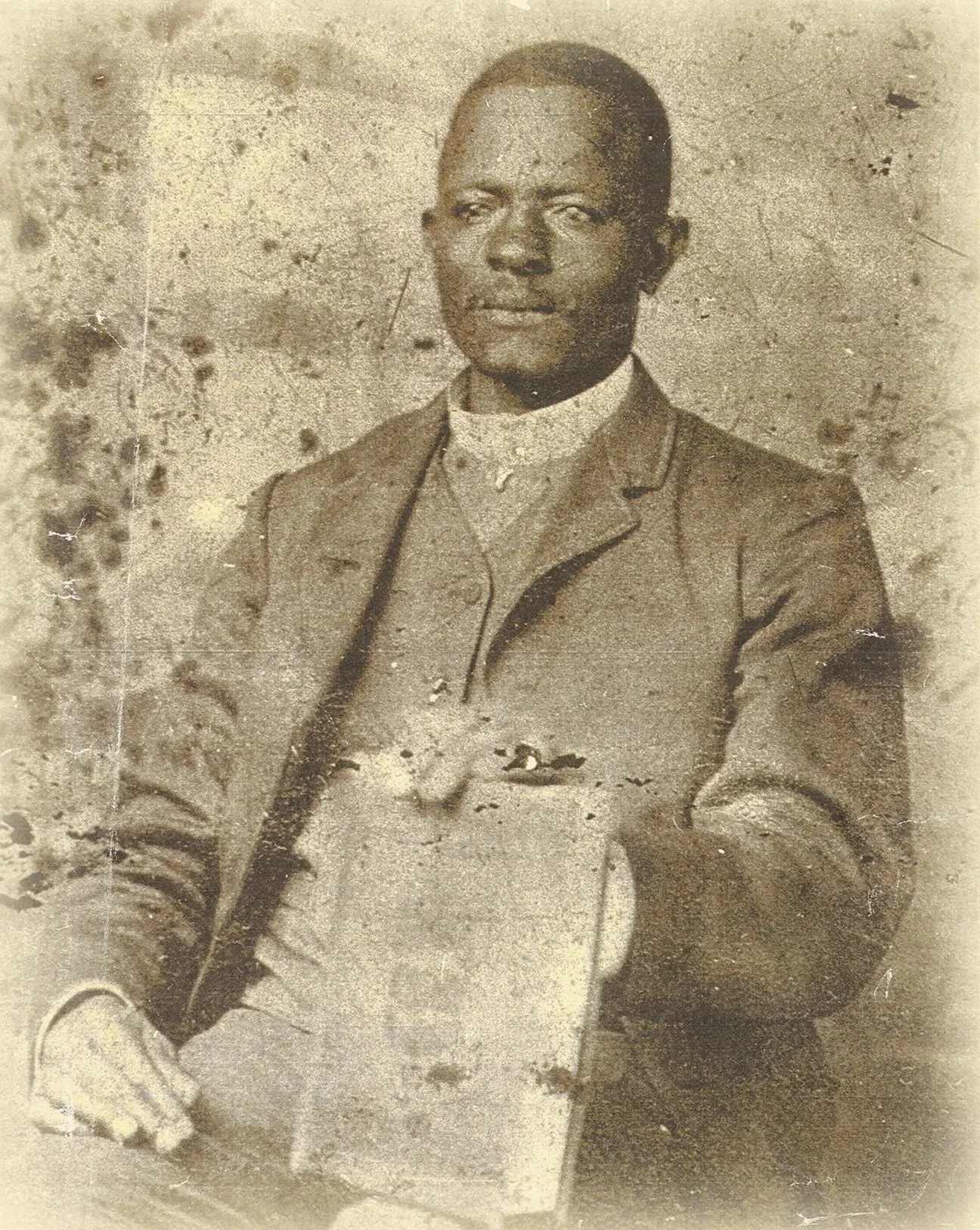
Lawrence Bernard Brown, as shown on the cover of Chuck B. Warren’s book, “From Slavery to Community Builder: The Story of Lawrence B. Brown.”